

A class of triangular norms on Trellis
-
摘要:
本文探究了非传递性对于Trellis结构上定义聚合算子的重要作用,基于区间子Trellis上给定的三角模得到了Trellis上一类新的三角模,给出了Trellis上三角模的不同构造方法。
Abstract:This article explores the important role of non transitivity in defining aggregation operators on Trellis. Based on the given triangular norms on interval sub Trellis, a new class of triangular norms on Trellis is obtained, and different construction methods for triangular norms on Trellis are presented.
-
Keywords:
- Psoset /
- Trellis /
- triangular norms
-
0. 引言
为了在统计度量空间的框架下对三角不等式进行推广,Menger[1]提出了三角模的概念,其在诸多应用领域起到了重要的作用。自Goguen[2]将三角模从单位区间扩展到广义序结构以来,其成果已成为处理复杂智能系统中非数字化信息的关键工具。
在许多数学分支及其他学科领域中,除了二元关系中较常见的传递性属性外,非传递关系同样普遍存在且发挥着重要作用[3]。概率论中对随机变量的讨论也体现出不具有传递性的关系特征[4-5]。Fried[6]中提出了Psoset的概念,文献[7]中定义了类似于格的Trellis结构,其他文献也对Psoset与Trellis展开了研究[8-15]。受有界格上聚合算子研究成果的启发[16-19],探索Trellis上的聚合算子逐渐成为该领域的热点。Zedam和Baets[20]首次将三角模的概念引入到Trellis上;Kong与Zhao[21]研究了Trellis上的一致模并提出了其构造方法。探索Trellis上更多新型聚合算子,仍是该领域的重要课题。
在此基础之上,本文基于Trellis上给定的三角模,构造Trellis上一类新的三角模,为信息聚合领域提供新的数学理论。
1. 预备知识
定义1.1[20] 设X是一个非空集合,$ ⊴ $是其上的二元关系,若满足自反性和反对称性,则称$ ⊴ $是X上的一个Pseudo序。具有Pseudo序关系的集合X称为Psoset,记作$\mathbb{P}=(X, \unlhd)$。
定义1.2[20] 设$\mathbb{P}=(X, \unlhd)$是Psoset,若对任意$ x,y\in X $,$ x\wedge y $($ x\vee y $)存在,则称P为$ \wedge$–semi–Trellis($ \vee $–semi–Trellis)。若P既是$ \wedge $–semi–Trellis, 又是$ \vee $–semi–Trellis,则称为Trellis,记作$ \mathbb{T}=(X, \unlhd, \wedge, \vee)$。
定义1.3[20] 若Psoset存在最小元(用0表示)和最大元(用1表示),则称为有界Psoset,记作$ \mathbb{P}=\left(X,⊴,\mathrm{0,1}\right) $。同理有界Trellis记作$ \mathbb{T}=\left(X,⊴,\wedge ,\vee ,\mathrm{0,1}\right) $。
定义1.4[20] 设$ \mathbb{T}=\left(X,⊴,\wedge ,\vee ,\mathrm{0,1}\right) $是有界Trellis,若a和b不可比较,则记为$ a‖b $。将所有与a不可比较的元的集合记为$ {I}_{a}=\{x\in X|x‖a\} $。
定义1.5[20] 设$ \mathbb{P}=(X, \unlhd) $是一个Psoset,称X中的元a为:
(1)右传递元:对任意$ x,y\in X $,当$ a⊴x⊴y $,有$ a⊴y $。
(2)左传递元:对任意$ x,y\in X $,当$ x⊴y⊴a $,有$ x⊴a $。
(3)中间传递元:对任意$ x,y\in X $,当$ x⊴a⊴y $,有$ x⊴y $。
(4)传递元:同时满足左传递、右传递及中间传递的元素。
本文记$ {X}^\text{rtr} $、$ {X}^\text{ltr} $、$ {X}^\text{mtr} $、$ {X}^\text{tr} $依次为X中所有右传递元、左传递元、中间传递元及传递元构成的集合。
定义1.6[20] 设$ \mathbb{T}=\left(X,⊴,\wedge ,\vee ,\mathrm{0,1}\right) $是一个有界Trellis,其上的二元运算F具有:
(1)交换性:对任意$ x,y\in X $,有$ F\left(x,y\right)=F\left(y,x\right) $。
(2)结合性:对任意$ x,y,z\in X $,有$ F\left(x,F\left(y,z\right)\right)= $ $ F\left(F\left(x,y\right),z\right) $。
(3)左单调性:对任意$ {x}_{1},{x}_{2},y\in X $,当$ {x}_{1}⊴{x}_{2} $时,有$ F\left({x}_{1},y\right)⊴F\left({x}_{2},y\right) $。
(4)右单调性:对任意$ {x}_{1},{x}_{2},y\in X $,当$ {x}_{1}⊴{x}_{2} $时,有$ F\left(y,{x}_{1}\right)⊴F\left(y,{x}_{2}\right) $。
(5)单调性:对任意$ {x}_{1},{x}_{2},{y}_{1},{y}_{2}\in X $,当$ {x}_{1}⊴{x}_{2}, $ $ {y}_{1}⊴{y}_{2} $时,有$ F\left({x}_{1},{y}_{1}\right)⊴F\left({x}_{2},{y}_{2}\right) $成立。
定义1.7[20] 设$ \mathbb{P}=\left(X,⊴,\mathrm{0,1}\right) $是一个有界Psoset,若$ T:{X}^{2}\to X $满足交换性、结合性、单调性、存在单位元1,则称T为X上的三角模。
2. 主要结果
定理2.1 设$ \mathbb{T}=\left(X,⊴,\wedge ,\vee ,\mathrm{0,1}\right) $是一个有界Trellis,$ a \in\left(X^{\mathrm{mtr}} \cap X^{\mathrm{trt}}\right) \backslash\{0,1\}, T_a(x, y) $是$ [a,1] $上的三角模。若对任意$ x\in {I}_{a},y\in (0,a) $,有$ x‖y $,则二元运算
$$ T(x, y)=\left\{\begin{array}{cc} T_a(x, y), & (x, y) \in[a, 1]^2, \\ x, & (x, y) \in[0, a) \times[a, 1] \cup I_a \times\{1\}, ~ \\ y, & (x, y) \in[a, 1] \times[0, a) \cup\{1\} \times I_a, \\ 0, & \text { 其他情况, } \end{array}\right. $$ 是X上的三角模。
证明 单位元、交换性显然成立。
证明单调性,只需要证明对任意的$ x,y,z,t\in X $,当$ x⊴z,y⊴t $时,有$ T\left(x,y\right)⊴T\left(z,t\right) $成立。当$ x,y,z,t $属于同一个区间的时候,结论显然成立。以下是$ x,y,z,t $属于不同区间的情况。
2.1 当$ x\in [0,a) $的情形
(1) $y\in [0,a)$。
① $ z\in [0,a) $,当$ t\in [a,1] $时,有
$$ T\left(x,y\right)=0⊴z=T\left(z,t\right) \text{;} $$ ② $ z\in [a,1] $,当$ t\in [a,1] $时,有
$$ T\left(x,y\right)=0⊴{T}_{a}\left(z,t\right)=T\left(z,t\right) 。 $$ (2) $ y\in [a,1] 。$
① $ z\in [0,a) $,当$ t\in [a,1] $时,有
$$ T\left(x,y\right)=x⊴z=T\left(z,t\right) \text{;} $$ ② $ z\in [a,1] $,当$ t\in [a,1] $时,有
$$ T\left(x,y\right)=x⊴a⊴{T}_{a}\left(z,t\right)=T\left(z,t\right) 。 $$ (3) $y\in {I}_{a}$。
① $ z\in [0,a) $,当$ t\in [a,1] $时,有
$$ T\left(x,y\right)=0⊴z=T\left(z,t\right) \text{;} $$ 当$ t\in {I}_{a} $时,有
$$ T\left(x,y\right)=0⊴0=T\left(z,t\right) 。 $$ ② $ z\in [a,1] $,当$ t\in [a,1] $时,有
$$ T\left(x,y\right)=0⊴{T}_{a}\left(z,t\right)=T\left(z,t\right) 。 $$ 当$ t\in {I}_{a} $时,有如下2种情况:
$$ T\left(x,y\right)=0⊴0=T\left(z,t\right) \text{;} $$ $$ T\left(x,y\right)=0⊴t=T\left(z,t\right) 。 $$ 2.2 当$ x\in [a,1] $的情形
(1) $ y\in [0,a) $。$ z\in [a,1] $,当$ t\in [0,a) $时,有
$$ T\left(x,y\right)=y⊴t=T\left(z,t\right) \text{;} $$ 当$ t\in [a,1] $时,有
$$ T\left(x,y\right)=y⊴a⊴{T}_{a}\left(z,t\right)=T\left(z,t\right) 。 $$ (2) $ y\in {I}_{a} $。$ z\in [a,1] $,当$ t\in [a,1] $时,若$ x\in [a,1) $,$ z\in [a,1] $,则
$$ T\left(x,y\right)=0⊴{T}_{a}\left(z,t\right)=T\left(z,t\right) \text{;} $$ 若$ x=1 $,必有$ z=1 $,则
$$ T\left(x,y\right)=y⊴t=T\left(z,t\right) \text{;} $$ 当$ t\in {I}_{a} $时,若$ x\in [a,1) $,$ z\in [a,1) $,则
$$ T\left(x,y\right)=0⊴0=T\left(z,t\right) \text{;} $$ 若$ x\in [a,1) $,$ z=1 $,则
$$ T\left(x,y\right)=0⊴t=T\left(z,t\right) \text{;} $$ 若$ x=1 $,必有$ z=1 $,则
$$ T\left(x,y\right)=y⊴t=T\left(z,t\right) 。 $$ 2.3 当$ x\in {I}_{a} $的情形
(1) $y\in [0,a)$。
① $ z\in [a,1] $,当$ t\in [0,a) $时,有
$$ T\left(x,y\right)=0⊴t=T\left(z,t\right) \text{;} $$ 当$ t\in [a,1] $时,有
$$ T\left(x,y\right)=0⊴{T}_{a}\left(z,t\right)=T\left(z,t\right) 。 $$ ② $ z\in {I}_{a} $,当$ t\in [0,a) $时,有
$$ T\left(x,y\right)=0⊴0=T\left(z,t\right) 。 $$ 当$ t\in [a,1] $时,有如下2种情况:
$$ T\left(x,y\right)=0⊴0=T\left(z,t\right) \text{;} $$ $$ T\left(x,y\right)=0⊴z=T\left(z,t\right) 。 $$ (2) $y\in [a,1]$。
① $ z\in [a,1] $,当$ t\in [a,1] $时,若$ y\in [a,1) $,有
$$ T\left(x,y\right)=0⊴{T}_{a}\left(z,t\right)=T\left(z,t\right) \text{;} $$ 若$ y=1 $,必有$ t=1 $,则
$$ T\left(x,y\right)=x⊴z=T\left(z,t\right) 。 $$ ② $ z\in {I}_{a} $,当$ t\in [a,1] $时,若$ y\in [a,1) $,$ t\in [a,1) $,则
$$ T\left(x,y\right)=0⊴0=T\left(z,t\right) \text{;} $$ 若$ y\in [a,1) $,$ t=1 $,则
$$ T\left(x,y\right)=0⊴z=T\left(z,t\right) \text{;} $$ 若$ y=1 $,必有$ t=1 $,则
$$ T\left(x,y\right)=x⊴z=T\left(z,t\right) 。 $$ (3) $y\in {I}_{a}$。
① $ z\in [a,1] $,当$ t\in [a,1] $时,有
$$ T\left(x,y\right)=0⊴{T}_{a}\left(z,t\right)=T\left(z,t\right) 。 $$ 当$ t\in {I}_{a} $时,有如下2种情况:
$$ T\left(x,y\right)=0⊴0=T\left(z,t\right) \text{;} $$ $$ T\left(x,y\right)=0⊴t=T\left(z,t\right) 。 $$ ② $ z\in {I}_{a} $,当$ t\in [a,1] $时有如下2种情况:
$$ T\left(x,y\right)=0⊴0=T\left(z,t\right) \text{;} $$ $$ T\left(x,y\right)=0⊴z=T\left(z,t\right) 。 $$ 综上所证,$ T\left(x,y\right) $具有单调性。
下证结合性。只需要证明对任意的$ x,y,z\in X $,有$ T\left(T\left(x,y\right),z\right)=T\left(x,T\left(y,z\right)\right) $成立。当$ x,y,z $属于同一个区间的时候,结论显然成立。以下是$ x,y,z $属于不同区间的情况。
2.4 当$ x\in [0,a) $的情形
(1) $ y\in [0,a) $。当$ z\in X $,有
$$ T\left(T\left(x,y\right),z\right)=0=T\left(x,T\left(y,z\right)\right) 。 $$ (2) $ y\in [a,1] $。$ z\in [0,a) $,有
$$ T\left(T\left(x,y\right),z\right)=0=T\left(x,T\left(y,z\right)\right) \text{;} $$ 当$ z\in [a,1] $,有
$$ T\left(T\left(x,y\right),z\right)=x=T\left(x,T\left(y,z\right)\right) \text{;} $$ 当$ z\in {I}_{a} $,有
$$ T\left(T\left(x,y\right),z\right)=0=T\left(x,T\left(y,z\right)\right) 。 $$ (3) $ y\in {I}_{a} $。当$ z\in X $,有
$$ T\left(T\left(x,y\right),z\right)=0=T\left(x,T\left(y,z\right)\right) 。 $$ 2.5 当$ x\in [a,1] $的情形
(1) $ y\in [0,a) $。当$ z\in [0,a) $时,有
$$ T\left(T\left(x,y\right),z\right)=0=T\left(x,T\left(y,z\right)\right) \text{;} $$ 当$ z\in [a,1] $时,有
$$ T\left(T\left(x,y\right),z\right)=y=T\left(x,T\left(y,z\right)\right) 。 $$ 当$ z\in {I}_{a} $时,有
$$ T\left(T\left(x,y\right),z\right)=0=T\left(x,T\left(y,z\right)\right) 。 $$ (2) $ y\in [a,1] $。当$ z\in [0,a) $时,有
$$ T\left(T\left(x,y\right),z\right)=z=T\left(x,T\left(y,z\right)\right) 。 $$ 当$ z\in {I}_{a} $时,若$ x\in [a,1) $,$ y\in [a,1) $时,
$$ T\left(T\left(x,y\right),z\right)=0=T\left(x,T\left(y,z\right)\right) \text{;} $$ 若$ x\in [a,1) $,$ y=1 $时,
$$ T\left(T\left(x,y\right),z\right)=0=T\left(x,T\left(y,z\right)\right) \text{;} $$ 若$ x=1 $,$ y\in [a,1) $时,
$$ T\left(T\left(x,y\right),z\right)=0=T\left(x,T\left(y,z\right)\right) \text{;} $$ 若$ x=1 $,$ y=1 $时,
$$ T\left(T\left(x,y\right),z\right)=z=T\left(x,T\left(y,z\right)\right) 。 $$ (3) $ y\in {I}_{a} $。当$ z\in [0,a) $时,则
$$ T\left(T\left(x,y\right),z\right)=0=T\left(x,T\left(y,z\right)\right) 。 $$ 当$ z\in [a,1] $时,若$ x\in [a,1) $,$ z\in [a,1) $,则
$$ T\left(T\left(x,y\right),z\right)=0=T\left(x,T\left(y,z\right)\right) \text{;} $$ 当$ x\in [a,1) $,$ z=1 $,则
$$ T\left(T\left(x,y\right),z\right)=0=T\left(x,T\left(y,z\right)\right) \text{;} $$ 当$ x=1 $,$ z\in [a,1) $,则
$$ T\left(T\left(x,y\right),z\right)=0=T\left(x,T\left(y,z\right)\right) \text{;} $$ 当$ x=1 $,$ z=1 $,则
$$ T\left(T\left(x,y\right),z\right)=y=T\left(x,T\left(y,z\right)\right) \text{;} $$ 当$ z\in {I}_{a} $时,
$$ T\left(T\left(x,y\right),z\right)=0=T\left(x,T\left(y,z\right)\right) 。 $$ 2.6 当$ x\in {I}_{a} $的情形
(1) $ y\in [0,a) $。当$ z\in X $,则
$$ T\left(T\left(x,y\right),z\right)=0=T\left(x,T\left(y,z\right)\right) 。 $$ (2) $ y\in [a,1] $。当$ z\in [0,a) $,则
$$ T\left(T\left(x,y\right),z\right)=0=T\left(x,T\left(y,z\right)\right) \text{;} $$ 当$ z\in [a,1] $时,若$ y\in [a,1) $,$ z\in [a,1) $,则
$$ T\left(T\left(x,y\right),z\right)=0=T\left(x,T\left(y,z\right)\right) \text{;} $$ 若$ y\in [a,1) $,$ z=1 $,则
$$ T\left(T\left(x,y\right),z\right)=0=T\left(x,T\left(y,z\right)\right) \text{;} $$ 若$ y=1 $,$ z\in [a,1) $,则
$$ T\left(T\left(x,y\right),z\right)=0=T\left(x,T\left(y,z\right)\right) \text{;} $$ 若$ y=1 $,$ z=1 $,则
$$ T\left(T\left(x,y\right),z\right)=x=T\left(x,T\left(y,z\right)\right) \text{;} $$ 当$ z\in {I}_{a} $,$ y\in [a,1] $时,有
$$ T\left(T\left(x,y\right),z\right)=0=T\left(x,T\left(y,z\right)\right) 。 $$ (3) $ y\in {I}_{a} $。当$ z\in [0,a) $,则
$$ T\left(T\left(x,y\right),z\right)=0=T\left(x,T\left(y,z\right)\right) \text{;} $$ 当$ z\in [a,1] $,则
$$ T\left(T\left(x,y\right),z\right)=0=T\left(x,T\left(y,z\right)\right) 。 $$ 综上所证,$ T(x,y) $具有结合性。因此,$ T(x,y) $是T上的三角模。
定理2.2 设$ \mathbb{T}=\left(X,⊴,\wedge ,\vee ,\mathrm{0,1}\right) $是一个有界Trellis,$ a\in ({X}^\text{mtr}\bigcap {X}^\text{ltr})\backslash \left\{\mathrm{0,1}\right\} $,$ {S}_{a}(x,y) $是$ \left[0\right.,a] $上的三角余模。若对任意$ x\in {I}_{a},y\in (a,1) $,有$ x‖y $,则二元运算
$$ S(x,y)=\left\{\begin{array}{cc}{S}_{a}(x,y),& (x,y)\in {\left[0\right.,a]}^{2},\\ x,& (x,y)\in (a,1]\times \left[0\right.,a]\bigcup {I}_{a}\times \{0\},\\ y,& (x,y)\in [0,a]\times (a,1]\bigcup \left\{0\right\}\times {I}_{a},\\ 1,& 其他情况,\end{array}\right. $$ 是X上的三角余模。
证明 过程与定理2.1类似。
例1设$ \mathbb{T}=\left(X,⊴,\wedge ,\vee ,\mathrm{0,1}\right) $是图 1所示的Trellis,$ c\in ({X}^\text{mtr}\bigcap {X}^\text{rtr})\backslash \left\{\mathrm{0,1}\right\} $,$ {T}_{c}(x,y)=x\wedge y $是$ [c,1] $上的三角模,由定理2.1可得一类新的三角模T,见表 1。
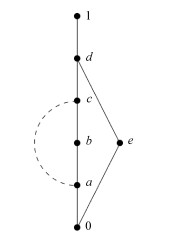 图 1 例1中的TrellisFig. 1 Trellis in example 1
 下载:
全尺寸图片
表 1 三角模TTable 1 triangular norm T
T 0 a b c d e 1 0 0 0 0 0 0 0 0 a 0 0 0 0 0 0 a b 0 0 0 b b 0 b c 0 0 b c c 0 c d 0 0 b c d 0 d e 0 0 0 0 0 0 e 1 0 a b c d e 1 推论2.1 设$ \mathbb{T}=\left(X,⊴,\wedge ,\vee ,\mathrm{0,1}\right) $是一个有界Trellis,$ a\in ({X}^\text{mtr}\bigcap {X}^\text{rtr})\backslash \left\{\mathrm{0,1}\right\} $,$ {T}_{a}(x,y) $是$ [a,1] $上的三角模。若对于$ x\in {I}_{a},y\in (0,a) $和$ x\in {I}_{a},y\in (a,1) $,有$ x‖y $,则定理2.1中的二元运算T是X上的三角模。
推论2.2 设$ \mathbb{T}=\left(X,⊴,\wedge ,\vee ,\mathrm{0,1}\right) $是一个有界Trellis,$ a\in ({X}^\text{mtr}\bigcap {X}^\text{ltr})\backslash \left\{\mathrm{0,1}\right\} $,$ {S}_{a}(x,y) $是$ \left[0\right.,a] $上的三余角模。若对于$ x\in {I}_{a},y\in (0,a) $和$ x\in {I}_{a},y\in (a,1) $,有$ x‖y $,则定理2.2中的二元运算S是X上的三角余模。
3. 结束语
Trellis结构上的聚合算子是目前该领域的研究热点,特别是Trellis上的三角模、一致模相继被提出,引起了众多学者的关注。本文研究了Trellis上一类新的三角模,给出了由区间子Trellis上三角模扩张得到Trellis上三角模的构造方法,文中主要结果为后续研究Trellis上的聚合算子提供了新的思路。
© The editorial department of Journal of Capital Normal University (Natural Science Edition) 2024.This is an open access article under the CC BY-NC-ND 4.0 license (https://creativecommons.org/licenses/by-nc-nd/4.0/). -
图 1 例1中的Trellis
Fig. 1 Trellis in example 1
下载:
全尺寸图片
表 1 三角模T
Table 1 triangular norm T
T 0 a b c d e 1 0 0 0 0 0 0 0 0 a 0 0 0 0 0 0 a b 0 0 0 b b 0 b c 0 0 b c c 0 c d 0 0 b c d 0 d e 0 0 0 0 0 0 e 1 0 a b c d e 1 -
[1] Menger K. Statistical metrics[J]. Proceedings of the National Academy of Sciences of the United States of America, 1942, 28(12): 535-537. [2] Goguen J A. L-fuzzy sets[J]. Journal of Mathematical Analysis and Applications, 1967, 18(1): 145-174. DOI: 10.1016/0022-247X(67)90189-8. [3] De Baets B, De Loof K, De Meyer H. A frequentist view on cycle-transitivity of reciprocal relations[J]. Fuzzy Sets and Systems, 2015, 281(C): 198-218. DOI: 10.1016/j.fss.2015.06.020. [4] De Baets B, De Meyer H, De Schuymer B. Cyclic evaluation of transitivity of reciprocal relations[J]. Social Choice and Welfare, 2006, 26(2): 217-238. DOI: 10.1007/s00355-006-0093-3. [5] Reichenbach T, Mobilia M, Frey E. Mobility promotes and jeopardizes biodiversity in rock-paper-scissors games[J]. Nature, 2007, 448(7157): 1046-1049. DOI: 10.1038/nature06095. [6] Fried E. Tournaments and non - associative lattices[J]. Annual University Science Budapest, 1970, 13: 151-164. [7] Skala H L. Trellis theory[J]. Algebra Universalis, 1971, 1(1): 218-233. DOI: 10.1007/BF02944982. [8] Rai S B, Rao P. Modular, weakly distributive and normal trellises[J]. Journal of Physics: Conference Series, 2021, 1850(1): 012090. DOI: 10.1088/1742-6596/1850/1/012090. [9] Rai S B, Bhatta S P. Some characterizations of pseudo-chains in pseudo-ordered sets[J]. Asian-European Journal of Mathematics, 2021, 14(5): 2150074. DOI: 10.1142/s1793557121500741. [10] Abueida A A, Diestelkamp W S, Edwards S P, et al. Determining properties of a multipartite tournament from its lattice of convex subsets[J]. Australasian Journal of Combinatorics, 2005, 31: 217-230. [11] Gács A, Sziklai P. On the structure of a generalization of weakly associative lattices[J]. Ars Comb, 2002, 62: 221-226. [12] Sawicki D, Grabowski A. On weakly associative lattices and near lattices[J]. Formalized Mathematics, 2021, 29(2): 77-85. DOI: 10.2478/forma-2021-0008. [13] Yettou M, Amroune A, Zedam L. A binary operation-based representation of a lattice[J]. Kybernetika, 2019: 252-272. DOI: 10.14736/kyb-2019-2-0252. [14] Fried E, Grätzer G. Some examples of weakly associative lattices[J]. Colloquium Mathematicum, 1973, 27(2): 215-221. DOI: 10.4064/cm-27-2-215-221. [15] Cruz-Quinones M D, Harding J. Completions of pseudo ordered sets[J]. Order, 2022, 39(1): 95-111. DOI: 10.1007/s11083-021-09565-4. [16] Dan Y X, Hu B Q, Qiao J S. New construction of t-norms and t-conorms on bounded lattices[J]. Fuzzy Sets and Systems, 2020, 395: 40-70. DOI: 10.1016/j.fss.2019.05.017. [17] Geng J, Wang R N, Chen Z W. Generating quasi-t-subnorms on preordered sets via Adjunctions and Left Galois Connections[J]. Fuzzy Sets and Systems, 2024, 490: 109036. DOI: 10.1016/j.fss.2024.109036. [18] Geng J, Wang R N, Chen Z W. Construction of non-direct product triangular norms on product lattices[J]. Fuzzy Sets and Systems, 2023, 469: 108637. DOI: 10.1016/j.fss.2023.108637. [19] Geng J, Chen Z W, Wang R N, et al. Ordinal sums of triangular norms on sublattices of a bounded lattice[J]. Fuzzy Sets and Systems, 2023, 462: 108412. DOI: 10.1016/j.fss.2022.10.004. [20] Zedam L, De Baets B. Triangular norms on bounded trellises[J]. Fuzzy Sets and Systems, 2023, 462: 108468. DOI: 10.1016/j.fss.2023.01.003. [21] Kong Y, Zhao B. Uninorms on bounded trellises[J]. Fuzzy Sets and Systems, 2024, 481: 108898. DOI: 10.1016/j.fss.2024.108898.
