

1D nanostructure-assembled CuO/Cu2O hollow spheres for lithium-ion battery with superior capacity and long cycle life
doi: 10.19789/j.1004-9398.2026.04.002
-
摘要:
通过简单的一锅表面活性剂和无模板水热法, 成功制备一种由一维(1D)纳米结构组装而成的新型多孔CuO/Cu2O复合空心球。电化学性能表明, 所获得的多孔CuO/Cu2O复合空心球是解决金属氧化物锂离子负极材料大体积膨胀问题的一种非常有效的结构。与初始循环相比, 在100 mA/g下循环500次后, 多孔CuO/Cu2O复合空心球保持$ 6 8 0 \ \mathrm { m A h/g } $的高可逆容量, 且没有容量衰减。同时, 该多孔CuO/Cu2O复合空心球表现出良好的倍率性能, 其可逆容量和循环寿命均显著优于已报道的CuO和Cu2O纳米结构, 以及CuO/Cu2O复合纳米结构, 且容量衰减得到显著抑制。CuO/Cu2O复合空心球作为锂离子电池负极材料所展现的优异电化学性能, 归因于多孔和1D纳米结构促进锂离子和电子的扩散, 有效缓解了由于介孔和内部中空空间引起的体积变化, 以及多孔CuO/Cu5O复合空心球中CuO和Cu2O之间的协同效应。
Abstract:A novel porous CuO/Cu2O composite hollow sphere assembled with one-dimensional (1D) nanostructures was successfully synthesized by a facile one-pot surfactant and template-free hydrothermal method. The electrochemical performance evidently demonstrated that the achieved porous CuO/Cu2O composite hollow sphere was a very effective structure for solving the large volume expansion problem, which was serious issue for metal oxide anode materials. Compared to the initial cycle, the porous CuO/Cu2O composite hollow spheres maintain a high reversible capacity of 680 mAh/g after 500 cycles at 100 mA/g without capacity fading. Meanwhile, the porous CuO/Cu2O composite hollow spheres exhibit a good rate capability. The reversible capacity and cycling life significantly superior to those of reported CuO and Cu2O nanostructures as well as CuO/Cu2O h composite nanostructures, and the capacity fade was significantly inhibited. The excellent electrochemical performance of the CuO/Cu2O h composite hollow spheres for anode materials in lithium-ion (Li+) batteries are attributed to the efficient diffusion of Li+ and electron facilitated by porous and 1D nanostructures, which promotes the diffusion of Li+ and electrons, effectively mitigates the volume changes caused by mesopores and internal hollow spaces, and the synergistic effect between CuO and Cu2O within the porous CuO/Cu2O hollo composite hollow spheres.
-
Keywords:
- copper/copper compounds /
- electrochemistry /
- hydrothermal /
- porous materials
-
0. Introduction
Micro/nanostructures with versatile composition have recently attracted considerable attention because of their potential applications in catalysis[1], gas sensors[2] and energy storage[3]. As unique micro/nanostructures, hollow micro/nanospheres have been considered as promising electrode materials for lithium-ion(Li+) batteries due to their large surface area, extra Li+ storage space and short Li+ diffusion pathways[4]. Therefore, many inorganic hollow micro/nanospheres have recently been fabricated as electrode materials for Li+ batteries[5-11].
Since nano-sized transition-metal oxides have been exploited as anode materials for Li+ batteries for the first time[12], many transition-metal oxides with various morphologies have been developed as anode materials for Li+ batteries[13]. It has been demonstrated that these anode materials have the capability to undergo conversion reaction with lithium according to the following reduction/oxidation mechanism of $\mathrm{M}_x \mathrm{O}_y+2 y \mathrm{Li}^{+}+2 y \mathrm{e}^{-} \rightleftharpoons y \mathrm{Li}_2 \mathrm{O}+x \mathrm{M}^{0} $[12]. The conversion reaction indicates that transition-metal oxides employed as anode materials for Li+ batteries generally exhibit large rechargeable capacity resulting from the multiple electron reaction, compared to graphitic anode materials.
As important p-type semiconductors, CuO and Cu2O have recently attracted considerable attention for their potential applications in Li+ batteries used as anode materials, because of their abundance, low cost, good safety and high theoretical capacity(670 mAh/g for CuO and 372 mAh/g for Cu2O)[14-15]. There are several reports on the Li+ battery performance of CuO and Cu2O micro/nanostructured anode materials. For example, leaf-like CuO nanostructures exhibited a reversible capacity of 420.1 mAh/g at 0.10 C(1 C=372 mAh/g)rate after 55 cycles[15]; CuO polycrystalline nanowires exhibited 650 mAh/g at 0.05 C rate after 100 cycles but with irregular behavior[16]; CuO nanofibers exhibited stable reversible capacity of 452 mAh/g at 100 mA/g during up to 100 cycles but with poor rate capability[17]; CuO nanostructures delivered reversible capacity of 495 mAh/g after 40 cycles at 100 mA/g[18]; porous CuO hollow octahedra showed reversible capacity of 470 mAh/g at 100 mA/g after 100 cycles[19]; mesoporous Cu2O microspheres displayed a reversible capacity of 355 mAh/g at 0.10 C rate after 50 cycles[20]; porous hollow Cu2O nanospheres delivered the capacity of 500 mAh/g at 100 mA/g after 100 cycles[21]. These previous studies evidently demonstrate that capacity fading and poor cycling stability are the main issues for CuO and Cu2O anode materials for Li+ batteries. Meanwhile, the previous studies indicate that capacity fading and poor cycling stability mainly result from the significant volume expansion and low electrical conductivity of CuO and Cu2O anode materials[22]. To improve electrochemical performance of Cu-based anode materials for Li+ batteries by solving these issues, recently the main research focuses on designing and fabricating nanostructured Cu-based anode materials with unique morphology to alleviate their volume change during cycling[23], and combining Cu-based anode materials with carbon to improve their electrical conductivity[24].
Recent studies have demonstrated that electrode materials composed of two different metal oxides exhibit enhanced electrochemical performance in Li+ batteries due to a strong synergistic effect of metal oxides. As reported in previous literature, a strong synergistic effect of functional metal oxides can significantly improve electrochemical reactivity, electronic conductivity and mechanical stability of each metal oxide, leading to improved electrochemical performance of electrode materials such as high capacity and superior rate capability to their single component[25-32]. For the case of Cu2O and CuO semiconductor materials, although the electrochemical performance of these two materials employed as anode materials for Li+ batteries has been extensively studied as mentioned above, there are few studies on the Li+ battery properties of the electrodes composed of Cu2O and CuO composites. The previous study demonstrated that the electrode fabricated by a physical mixture of CuO and Cu2O powders exhibited poor electrochemical performance[33]. CuO/Cu2O composite hollow polyhedrons derived from metal-organic framework(MOF)templates displayed a reversible capacity of 740 mAh/g at 100 mA/g after 250 cycles but with severe capacity fading. The lowest reversible capacity is approximately 100 mAh/g[34]. Therefore, it is still a great challenge for fabricating electrodes of CuO/Cu2O micro/nanostructures with enhanced electrochemical performance such as high capacity and long cycling performance.
Benefiting from the strong synergistic effect of functional bi-component metal oxides and the intrinsic electrochemical performance of CuO and Cu2O as well as advantages of unique micro/nanostructures for Li+ batteries, bi-component CuO/Cu2O composite hollow spheres used as anode materials for Li+ batteries are expected to offer improved electrochemical performance. In this study, CuO/Cu2O composite hollow spheres were synthesized by a facile one-pot surfactant and template-free hydrothermal method. The fabricated CuO/Cu2O composite hollow spheres displayed excellent cycle performance and improved lithium storage properties. A high reversible capacity of 680 mAh/g was retained after 500 cycles at 100 mA/g without capacity fading. Meanwhile, the achieved CuO/Cu2O composite hollow spheres exhibited a good rate capability. The excellent electrochemical performance of the CuO/Cu2O composite hollow spheres is attributed to the efficient diffusion of lithium ions and electrons, effective alleviation of volume change and the synergistic effect between CuO and Cu2O in porous CuO/Cu2O composite hollow spheres.
1. Experimental Procedure
1.1 Synthesis of 1D nanostructure-assembled porous CuO/Cu2O hollow spheres
The synthesis process employed to prepare CuO/Cu2O composite hollow spheres was modified from the previous report[35]. A typical synthesis was described briefly below. Firstly, Cu2+ solution with concentration of 0.1 M was prepared by dissolving 1.0 g Cu(CH3COO)2·H2O powder in 50 mL deionized water. Secondly, 35 mL of the Cu2+ solution was transferred into a Teflon-lined stainless steel autoclave with volume of 50 mL, heated at 200 ℃ for 5 h and then cooled to room temperature. Finally, the formed powder products were washed with ethanol and deionized water several times and then dried at 60 ℃ for 8 h in a vacuum oven.
1.2 Characterization
X-ray diffraction(XRD)was applied to study the composition of prepared composite hollow spheres. A diffractometer Rigaku(Japan)using Cu Kα irradiation was employed to collect the data. A scanning electron microscope(SEM)was used to evaluate the morphology and size of the achieved composite hollow spheres. The experiments were conducted on a SEM(Hitachi S-4800, Japan).
1.3 Electrochemical performance characterization
A half-cell configuration(standard CR 2032 coin-type cells)was used to evaluate the battery performance. The working electrodes were fabricated using a mixed powder containing CuO/Cu2O composite hollow spheres(active materials), acetylene black and polyvinylidene fluoride(PVDF)binder with a 70∶20∶10 weight ratio. The mixed powder was dispersed in N-methyl-2 pyrrolidinone and ball milled with a mortar to make a slurry. The newly prepared slurry was coated onto copper foil and then dried under vacuum conditions at 80 ℃ for 24 h. The coin-type cells were assembled in an argon-filled glove box with oxygen and moisture less than 1 ppm, using metal lithium foil as the counter electrode, a Celgard 2400 membrane as the separator, 1 M LiPF6 dissolved in a mixture of ethylene carbonate(EC)-ethyl methyl carbonate(EMC)-dimethyl carbonate(DMC)with a volume ratio of 1∶1∶1 as the electrolyte. A battery testing instrument was applied to test the galvanostatic charge/discharge performance of the batteries at different current densities in a voltage window of 0.01-3.00 V at room temperature. A CHI 760C electrochemical workstation was employed to measure the cyclic voltammetry and electrochemical impedance spectroscopy.
2. Results and Discussion
XRD studies were applied to analyze the composition of the fabricated products. The corresponding XRD patterns of the products are shown in figure 1. The diffraction peaks at 2θ of 32.0°, 35.2°, 38.4°, 48.4°, and 58.0° can be easily indexed to the (110), (002), (111), (-202)and (202)planes of monoclinic CuO crystallite with lattice constants of a=4.688 Å, b=3.422 Å, c=5.132 Å, β=99.50°, and space group of C2/c(JCPDS 48-1548). In addition, the peaks at 2θ of 29.3°, 36.1°, 42.0°, and 61.2° can be well assigned to the (110), (111), (200), and(220)planes of cubic Cu2O crystallite with a lattice constant of a = 4.267 Å and space group of Pn3m(JCPDS 78-2076). No diffraction peaks from inpurities are detected in XRD patterns of the prepared products. Thus, the products prepared in the present work are composed of monoclinic CuO and cubic Cu2O crystallites.
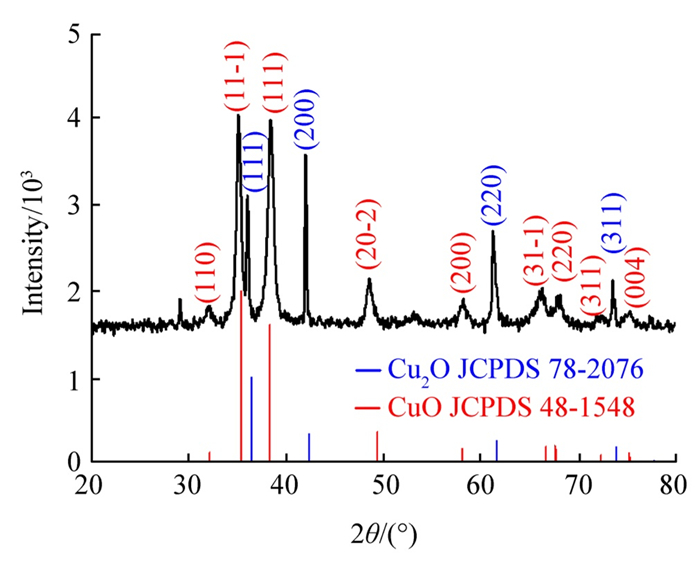 Fig. 1 X-ray diffraction(XRD)patterns of the prepared products
 下载:
全尺寸图片
SEM investigations were employed to evaluate the morphology and size of the obtained CuO/Cu2O composites. Figure 2 shows the SEM images of the obtained products at different magnifications. Low-magnification SEM images reveal that the synthesized products consist of a large quantity of microstructures with uniform sphere-like morphology and a diameter of 1-3 μm as presented in figure 2(a). Medium-magnification SEM images demonstrate that the CuO/Cu2O composite spheres exhibit an interiorly hollow structure as seen from broken spheres in figure 2(b) and 2(c). High-magnification SEM images show that the shell thickness of the CuO/Cu2O composite hollow spheres is about 650 nm as shown in figure 2(d). Furthermore, high-magnification SEM images demonstrate that the CuO/Cu2O composite hollow spheres exhibit the porous shell structure and are assembled from oriented 1D nanostructures. Thus the SEM studies demonstrate that the CuO/Cu2O composite hollow spheres with diameters of 1-3 μm have been achieved in large quantity.
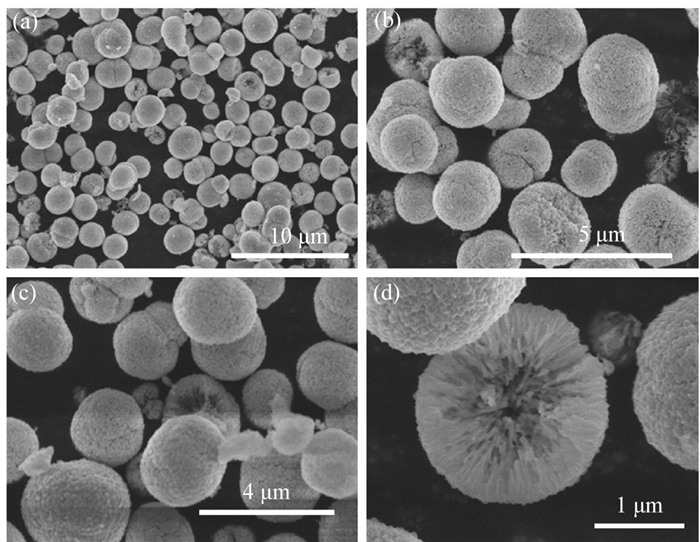 Fig. 2 scanning electron microscopy(SEM)images of the products with different magnifications(a)10 μm; (b)5 μm; (c)4 μm; (d)1 μm下载:
全尺寸图片
The electrochemical performance of the cells fabricated with CuO/Cu2O composite hollow spheres was evaluated by cyclic voltammetry(CV)and galvanostatic charge/discharge(Li+/Li) tests. The 1st to 5th CV curves of the electrode in the voltage range of 0.01-3.00 V are shown in figure 3. A strong cathodic peak at 1.05 V in the first cycle arises from the reduction of CuO into Cu1Ⅱ-xCuxⅠO1-x/2(an intermediate phase)and Cu2O into metallic Cu[36]. Another cathodic peak at 0.75 V originates from the further reduction of Cu1Ⅱ-xCuxⅠO1-x/2 into metallic Cu accompanying with the generation of SEI layer[36]. In addition, an anodic peak at 2.50 V during the first charge process is attributed to the oxidation of metallic Cu to Cu2O, and further Cu2O to CuO with the decomposition of Li2O[36]. The following cycles demonstrate that the cathodic peak at 1.05 V gradually shifts to 1.25 V with a significant decrease in intensity as shown in figure 3, which is caused by the irreversible reaction and the formation of the irreversible SEI layer in the first cycle[37]. Meanwhile, a slight change in peak position and intensity of the anodic peaks, as well as the nearly identical integral area in the following cycles indicate that the achieved CuO/Cu2O composite hollow spheres exhibit the excellent cycling stability and a gradual improvement in the electrochemical reversibility after the first cycle.
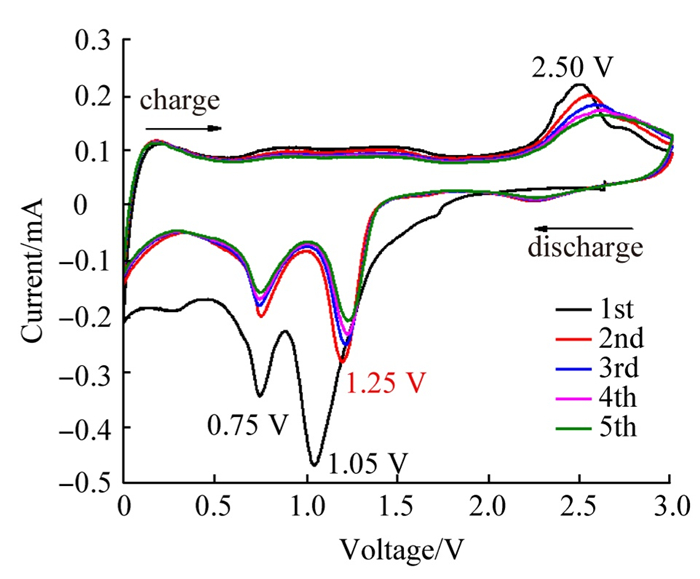 Fig. 3 cyclic voltammograms of 1st to 5th in a voltage range of 0.01-3.00 V下载:
全尺寸图片
The 1st, 2nd, 100th, 200th, and 500th galvanostatic charge/discharge (Li+/Li) cycle curves at a current density of 100 mA/g are shown in figure 4. A voltage plateau in the range of 2.50-1.25 V in the first and second cycles corresponds to the reduction of Cu2O to the metallic Cu and CuO to Cu1Ⅱ-xCuxⅠO1-x/2. A flat voltage plateau in the range of 1.25-1.01 V is attributed to the reduction of Cu1Ⅱ-xCuxⅠO1-x/2 to Cu2O. A flat voltage plateau in the range of 1.01-0.80 V is ascribed to the further reduction of Cu2O to metallic Cu[36]. In the first cycle, the discharge capacity of the electrode is about 647 mAh/g, and then the electrode exhibits a decrease feature for the discharge capacity in the following cycles from the 2nd to the 100th cycle. The discharge capacity decreases the lowest value of 275 mAh/g at the 100th cycle. Afterwards, the electrode shows a gradual increase in the discharge capacity from the 100th to the 500th cycle. The electrode achieves the highest discharge capacity of 680 mAh/g at the 500th cycle. After the 1st, 2nd and 100th cycles, the electrode also exhibits a gradual increase in the charge capacity from the 100th to the 500th cycle, which is partially ascribed to the formation of a polymeric layer during the decomposition of the electrolyte as reported for Co3O4 electrode[38-39].
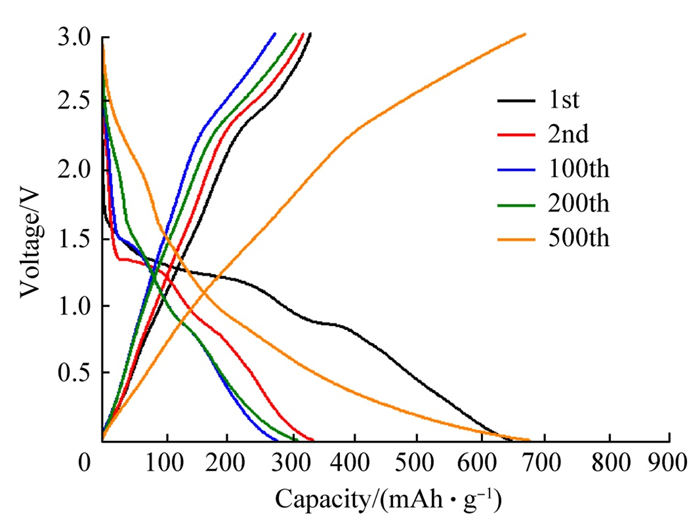 Fig. 4 galvanostatic charge/discharge curves of different cycles at the same rate of 100 mA/g下载:
全尺寸图片
The charge/discharge and rate capability studies further confirm the superior Li+ battery performance of the electrode fabricated from CuO/Cu2O composite hollow spheres. The charge/discharge performance, tested at a 100 mA/g current density over a voltage range of 0.01-3.00 V at room temperature, evidently demonstrates long cycling ability and superior capacity retention performance of the electrode over 500 cycles as shown in figure 5(a). Although the electrode shows a tremendous capacity fading from 647(at the first cycle)to 275 mAh/g(at the 100th cycle), which possibly resulted from the unstable SEI layer formation and lithiation-induced mechanical degradation, a monotonic increase in the capacity is achieved after fading to the lowest capacity of 275 mAh/g at the 100th cycle. The initial decrease followed by a monotonic increase in capacity has been previously reported for Co3O4 hollow sphere electrode in Li+ battery[40]. The capacity increase of CuO/Cu2O composite hollow sphere electrode is ascribed to continuous high-rate lithiation and a partially polymeric layer generation during the electrolyte decomposition as demonstrated in Co3O4 electrode[38-39]. Furthermore, the capacity reaches 680 mAh/g at a 100 mA/g current density during the 500th cycle, more than 247% recovery from the lowest capacity value.
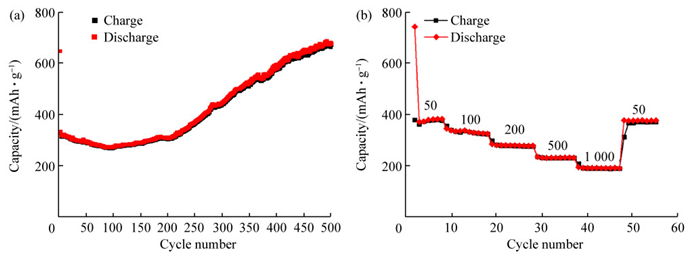 Fig. 5 electrochemical performance of CuO/Cu2O hollow spheres for Li+ battery anodes(a)cycle performance at a current density of 100 mA/g; (b)rate performance下载:
全尺寸图片
Figure 5(b) shows the rate capability performance of electrode prepared with CuO/Cu2O composite hollow spheres, clearly demonstrating the excellent rate capability of CuO/Cu2O composite hollow spheres as anode materials for Li+ battery. The electrode delivers specific capacities of 382, 344, 284, 234, and 194 mAh/g at current densities of 50, 100, 200, 500 mA/g, and 1 A/g, respectively. Above all, the CuO/Cu2O composite hollow sphere electrode achieves a reversible specific capacity to its initial specific capacity of 382 mAh/g at 50 mA/g after successive sequence test, showing the excellent rate capability of CuO/Cu2O composite hollow spheres.
To elucidate the mechanism for superior electrochemical performance of the electrode fabricated with CuO/Cu2O composite hollow spheres, the electronic conductivity and ion transfer properties of the electrode were investigated by electrochemical impedance spectroscopy(EIS). Figure 6 shows the Nyquist plots of the electrode before cycling and after 20 cycles tested in the range of 100.0 kHz-0.1 Hz. Both before and after cycling the electrodes exhibit similar features with a depressed semicircle in the medium to high frequency range and a linear tail in the low frequency range. The impedance property at the interface of the electrode and the electrolyte can be evaluated from the semicircles in different frequency regions. The semicircle in the medium frequency region is associated with charge transfer impedance(Rct), while the semicircle in the high frequency region is related to the contact impedance(Rs)created with the SEI layer generation. To better understand the charge transfer and electronic conductivity properties of the electrode, an equivalent circuit was constructed by fitting the Nyquist plots. In the equivalent circuit, Rs, Rct, Cs and Zw represent the solution resistance, charge transfer resistance, double layer capacitance and Warburg impedance, respectively. By further fitting the Nyquist plots, the value of Rct for the cycled electrode is 58.7 Ω, which is much lower than that(147 Ω)of the electrode without cycling. The significant decrease in the electrode Rct after cycling evidently demonstrates that the transfer performance of the electrons and Li+ is improved remarkably, leading to the superior Li+ battery performance of the electrode fabricated from CuO/Cu2O composite hollow spheres.
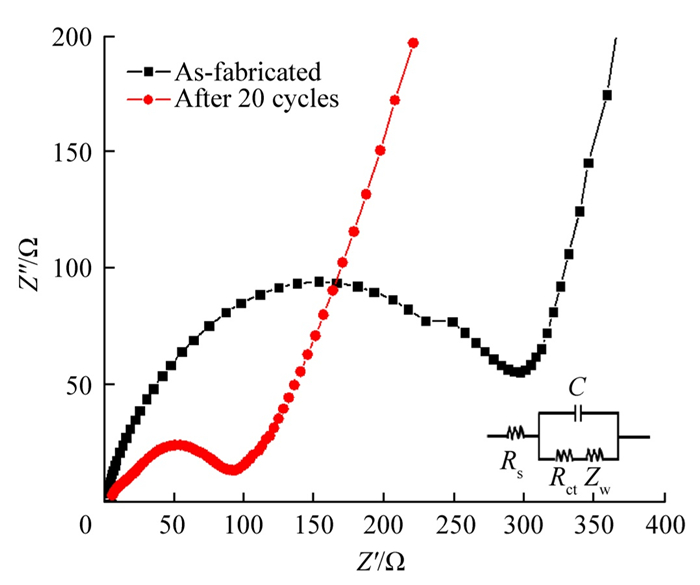 Fig. 6 the impedance spectra of electrodes before and after 20 cyclesNote: the inset shows an equivalent circuit, where Rs is the solution resistance; Rct is the charge-transfer resistance at the interface between the electrolyte and electrode; C is the double layer capacitance; ZW is the Warburg impedance.下载:
全尺寸图片
The electrode constructed with the prepared CuO/Cu2O composite hollow spheres achieves a specific capacity of 680 mAh/g at a 100 mA/g current density at the end of the 500th cycle. Thus, both capacity and cycling stability achieved in the present work are better than those of the previously reported in literature for CuO/Cu2O composites(377 mAh/g at 0.1 C after 50 cycles[33] and 601 mAh/g at 100 mA/g after 80 cycles[36])and for the CuO/Cu2O hollow spheres with poor porous structure(483 mAh/g at 67 mA/g after 30 cycles[41]). In addition, as mentioned in the introduction, single component CuO and Cu2O micro/nanostructured anode materials for Li+ batteries generally exhibited the unsatisfied electrochemical performance, such as low reversible capacity and poor cycling life. The superior Li+ storage properties such as high capacity and long cycling life achieved in CuO/Cu2O composite hollow spheres are largely attributed to the mesoporous hollow sphere structure assembled from 1D nanostructures and the synergistic effect between CuO and Cu2O. Firstly, mesopores and the space between two 1D nanostructures in the CuO/Cu2O composite hollow spheres are favorable for Li+ diffusion and intercalation into the active materials. Secondly, these mesopores are beneficial for quick permeation of electrolyte and can be applied to accommodate electrolyte. Thirdly, the mesopores and oriented 1D nanostructures can provide abundant active sites and large active-material/electrode contact areas for Li+ storage. Fourthly, the mesopores and oriented 1D nanostructures also can reduce the diffusion length for Li+ and electrolyte. Fifthly, both mesopores and interior hollow space of the CuO/Cu2O composite hollow spheres can provide enough void space to hold the large volume change, alleviate the mechanical stress caused by the volume change and keep the structural stability of the electrode during cycling with the Li+ insertion/extraction. Finally, the synergistic effect of the metal oxide composition in CuO/Cu2O composite hollow spheres also contributes to the superior electrochemical performance of the electrode. As discussed in the above galvanostatic charge/discharge tests(figure 4), the main chemical reaction at a lower voltage plateau of 1.01-0.80 V is reduction of Cu2O to Cu[36]. This means that CuO is inactive while Cu2O is active at this voltage plateau. As reported in the previous literature[26], the inactive CuO can alleviate the mechanical stress caused by insertion of Li+ into active Cu2O at this voltage plateau. Therefore, the superior reversible capacity and long cycling stability of the CuO/Cu2O composite hollow spheres are ascribed to the novel hollow structures with mesopores and oriented 1D nanostructures, as well as the synergistic effect between CuO and Cu2O.
A comparison of electrochemical properties for the porous CuO/Cu2O composite hollow spheres achieved in this work with other prepared CuO, Cu2O and CuO/Cu2O micro/nanostructures is summarized in table 1. The results in table 1 evidently demonstrate that the 1D nanostructures-assembled porous CuO/Cu2O hollow spheres exhibit much better reversible capacity and cycling life than CuO and Cu2O nanostructures, and CuO/Cu2O composite nanostructures as reported previously[14-21, 33-34, 36, 41]. Although CuO/Cu2O composite hollow polyhedrons fabricated using MOF templates show a 740 mAh/g capacity at 100 mA/g after 250 cycles, this anode material suffers from severe capacity fading. The reversible capacity fades to the lowest value of about 100 mAh/g. However, for the 1D nanostructure-assembled porous CuO/Cu2O hollow spheres, the lowest reversible capacity is 275 mAh/g at the 100th cycle, demonstrating that the capacity fading is significantly alleviated compared with CuO/Cu2O composite hollow polyhedrons.
Table 1 comparison of electrochemical properties for CuO/Cu2O composite hollow spheres with other prepared CuO, Cu2O and CuO/Cu2O micro/nanostructuresmorphology current rate/(mA·g-1) cycling number reversible capacity/(mAh·g-1) references leaf-like CuO nanostructures 0.10 C 55 420.1 [15] CuO polycrystalline nanowires 0.05 C 100 650 [16] CuO nanofibers 100 100 452 [17] CuO nanostructures 100 40 495 [18] porous CuO hollow octahedrals 100 100 470 [19] mesoporous Cu2O microspheres 0.10 C 50 355 [20] porous hollow Cu2O nanospheres 100 100 500 [21] cubic-Cu2O nanostructures 500 200 569.1 [14] physical mixture of CuO and Cu2O powders 0.10 C 50 377 [33] CuO/Cu2O composite hollow polyhedrons 100 250 740 [34] Cu2O-CuO composites 100 80 601 [36] CuO/Cu2O hollow spheres 67 30 483 [41] 1D nanostructure-assembled porous CuO/Cu2O hollow spheres 100 500 680 this work Note: C is the unit of charge-discharge rate. 3. Conclusions
1D nanostructure-assembled CuO/Cu2O composite hollow spheres with porous shell were prepared successfully via a facile one-pot surfactant and template-free hydrothermal method. The structural features of porous shell and oriented 1D nanostructures for the CuO/Cu2O composite hollow spheres were confirmed by SEM. These unique structural features endow the achieved CuO/Cu2O composite hollow spheres with excellent electrochemical performance including high reversible capacity and long cycling life. The electrode fabricated with the CuO/Cu2O composite hollow spheres displays a superior capacity of 680 mAh/g after 500 discharge/charge cycles, which is attributed to the efficient diffusion of Li+ and electrons, effective alleviation of volume change and the synergistic effect between CuO and Cu2O in porous CuO/Cu2O composite hollow spheres. The results achieved in this work demonstrate that 1D nanostructure-assembled metal oxide composite hollow spheres with porous shell are an effective architecture for designing high-capacity and long-life anode electrode of Li+ batteries.
© The editorial department of Journal of Capital Normal University (Natural Science Edition) 2025.This is an open access article under the CC BY-NC-ND 4.0 license (https://creativecommons.org/licenses/by-nc-nd/4.0/). -
Fig. 1 X-ray diffraction(XRD)patterns of the prepared products
下载:
全尺寸图片
Fig. 2 scanning electron microscopy(SEM)images of the products with different magnifications
(a)10 μm; (b)5 μm; (c)4 μm; (d)1 μm
下载:
全尺寸图片
Fig. 3 cyclic voltammograms of 1st to 5th in a voltage range of 0.01-3.00 V
下载:
全尺寸图片
Fig. 4 galvanostatic charge/discharge curves of different cycles at the same rate of 100 mA/g
下载:
全尺寸图片
Fig. 5 electrochemical performance of CuO/Cu2O hollow spheres for Li+ battery anodes
(a)cycle performance at a current density of 100 mA/g; (b)rate performance
下载:
全尺寸图片
Fig. 6 the impedance spectra of electrodes before and after 20 cycles
Note: the inset shows an equivalent circuit, where Rs is the solution resistance; Rct is the charge-transfer resistance at the interface between the electrolyte and electrode; C is the double layer capacitance; ZW is the Warburg impedance.
下载:
全尺寸图片
Table 1 comparison of electrochemical properties for CuO/Cu2O composite hollow spheres with other prepared CuO, Cu2O and CuO/Cu2O micro/nanostructures
morphology current rate/(mA·g-1) cycling number reversible capacity/(mAh·g-1) references leaf-like CuO nanostructures 0.10 C 55 420.1 [15] CuO polycrystalline nanowires 0.05 C 100 650 [16] CuO nanofibers 100 100 452 [17] CuO nanostructures 100 40 495 [18] porous CuO hollow octahedrals 100 100 470 [19] mesoporous Cu2O microspheres 0.10 C 50 355 [20] porous hollow Cu2O nanospheres 100 100 500 [21] cubic-Cu2O nanostructures 500 200 569.1 [14] physical mixture of CuO and Cu2O powders 0.10 C 50 377 [33] CuO/Cu2O composite hollow polyhedrons 100 250 740 [34] Cu2O-CuO composites 100 80 601 [36] CuO/Cu2O hollow spheres 67 30 483 [41] 1D nanostructure-assembled porous CuO/Cu2O hollow spheres 100 500 680 this work Note: C is the unit of charge-discharge rate. -
[1] Wang C G, Li S, An L N. Hierarchically porous Co3O4 hollow spheres with tunable pore structure and enhanced catalytic activity[J]. Chemical Communications, 2013, 49(67): 7427-7429. DOI: 10.1039/c3cc43094d. [2] Qin Y, Zhang F, Chen Y, et al. Hierarchically porous CuO hollow spheres fabricated via a one-pot template-free method for high-performance gas sensors[J]. The Journal of Physical Chemistry C, 2012, 116(22): 11994-12000. DOI: 10.1021/jp212029n. [3] Wang Z Y, Zhou L, Lou X W. Metal oxide hollow nanostructures for lithium-ion batteries[J]. Advanced Materials, 2012, 24(14): 1903-1911. DOI: 10.1002/adma.201200469. [4] Lai X Y, Halpert J E, Wang D. Recent advances in micro-/nano-structured hollow spheres for energy applications: from simple to complex systems [J]. Energy & Environmental Science, 2012, 5(2): 5604-5618. DOI: 10.1039/C1EE02426D. [5] Jian G Q, Xu Y H, Lai L C, et al. Mn3O4 hollow spheres for lithium-ion batteries with high rate and capacity[J]. Journal of Materials Chemistry A, 2014, 2(13): 4627-4632. DOI: 10.1039/c4ta00207e. [6] Kim W S, Hwa Y, Jeun J H, et al. Synthesis of SnO2 nano hollow spheres and their size effects in lithium-ion battery anode application[J]. Journal of Power Sources, 2013, 225: 108-112. DOI: 10.1016/j.jpowsour.2012.10.030. [7] Zheng J, Cao Y, Cheng C, et al. Facile synthesis of Fe3S4 hollow spheres with high-performance for lithium-ion batteries and water treatment[J]. Journal of Materials Chemistry A, 2014, 2(46): 19882-19888. DOI: 10.1039/C4TA05148C. [8] Wang Q H, Jiao L F, Han Y, et al. CoS2 hollow spheres: fabrication and their application in lithium-ion batteries [J]. The Journal of Physical Chemistry C, 2011, 115 (16): 8300-8304. DOI: 10.1021/jp111626a. [9] Yu S H, Quan B, Jin A H, et al. Hollow nanostructured metal silicates with tunable properties for lithium-ion battery anodes[J]. ACS Applied Materials & Interfaces, 2015, 7(46): 25725-25732. DOI: 10.1021/acsami.5b07075. [10] Zang J, Ye J C, Fang X L, et al. Hollow-in-hollow carbon spheres for lithium-ion batteries with superior capacity and cyclic performance[J]. Electrochimica Acta, 2015, 186: 436-441. DOI: 10.1016/j.electacta.2015.11.002. [11] Cai Y, Wang H G, Jin J, et al. Hierarchically structured porous TiO2 spheres constructed by interconnected nanorods as high performance anodes for lithium-ion batteries[J]. Chemical Engineering Journal, 2015, 281: 844-851. DOI: 10.1016/j.cej.2015.06.122. [12] Poizot P, Laruelle S, Grugeon S, et al. Nano-sized transition-metal oxides as negative-electrode materials for lithium-ion batteries[J]. Nature, 2000, 407(6803): 496-499. DOI: 10.1038/35035045. [13] Ji L W, Lin Z, Alcoutlabi M, et al. Recent developments in nanostructured anode materials for rechargeable lithium-ion batteries [J]. Energy & Environmental Science, 2011, 4 (8): 2682-2699. DOI: 10.1039/c0ee00699h. [14] Kim M C, Kim S J, Han S B, et al. Cubic and octahedral Cu2O nanostructures as anodes for lithium-ion batteries [J]. Journal of Materials Chemistry A, 2015, 3(45): 23003-23010. DOI: 10.1039/c5ta05455a. [15] Wang C, Li Q, Wang F F, et al. Morphology-dependent performance of CuO anodes via facile and controllable synthesis for lithium-ion batteries[J]. ACS Applied Materials & Interfaces, 2014, 6(2): 1243-1250. DOI: 10.1021/am405061c. [16] Chen L B, Lu N, Xu C, et al. Electrochemical performance of polycrystalline CuO nanowires as anode material for Li ion batteries[J]. Electrochimica Acta, 2009, 54(17): 4198-4201. DOI: 10.1016/j.electacta.2009.02.065. [17] Sahay R, Suresh-Kumar P, Aravindan V, et al. High aspect ratio electrospun CuO nanofibers as anode material for lithium-ion batteries with superior cycle ability[J]. The Journal of Physical Chemistry C, 2012, 116(34): 18087-18092. DOI: 10.1021/jp3053949. [18] Banerjee A, Singh U, Aravindan V, et al. Synthesis of CuO nanostructures from Cu-based metal organic framework (MOF-199) for application as anode for Liion batteries[J]. Nano Energy, 2013, 2(6): 1158-1163. DOI: 10.1016/j.nanoen.2013.04.008. [19] Wu R B, Qian X K, Yu F, et al. MOF-templated formation of porous CuO hollow octahedra for lithium-ion battery anode materials[J]. Journal of Materials Chemistry A, 2013, 1(37): 11126-11129. DOI: 10.1039/c3ta12621h. [20] Zhang Z L, Chen H, She X L, et al. Synthesis of mesoporous copper oxide microspheres with different surface areas and their lithium storage properties[J]. Journal of Power Sources, 2012, 217: 336-344. DOI: 10.1016/j.jpowsour.2012.05.088. [21] Shilpa R P, Sharma A. Li-ion storage in morphology tailored porous hollow Cu2O nanospheres fabricated by Ostwald ripening[J]. RSC Advances, 2016, 6(107): 105231-105238. DOI: 10.1039/C6RA22839A. [22] Wang Z Y, Su F B, Madhavi S, et al. CuO nanostructures supported on Cu substrate as integrated electrodes for highly reversible lithium storage[J]. Nanoscale, 2011, 3(4): 1618-1623. DOI: 10.1039/c0nr00827c. [23] Wang C, Higgins D, Wang F F, et al. Controlled synthesis of micro/nanostructured CuO anodes for lithium-ion batteries[J]. Nano Energy, 2014, 9: 334-344. DOI: 10.1016/j.nanoen.2014.08.009. [24] Lu Y Y, Zhang N, Zhao Q, et al. Micro-nanostructured CuO/C spheres as high-performance anode materials for Na-ion batteries[J]. Nanoscale, 2015, 7(6): 2770-2776. DOI: 10.1039/c4nr06432a. [25] Jiang J, Li Y Y, Liu J P, et al. Recent advances in metal oxide-based electrode architecture design for electrochemical energy storage[J]. Advanced Materials, 2012, 24(38): 5166-5180. DOI: 10.1002/adma.201202146. [26] Guo W X, Sun W W, Wang Y. Multilayer CuO@NiO hollow spheres: microwave-assisted metal-organic-framework derivation and highly reversible structure-matched stepwise lithium storage[J]. ACS Nano, 2015, 9 (11): 11462-11471. DOI: 10.1021/acsnano.5b05610. [27] Wu M S, Chang H W. Self-assembly of NiO-coated ZnO nanorod electrodes with core−shell nanostructures as anode materials for rechargeable lithium-ion batteries [J]. The Journal of Physical Chemistry C, 2013, 117 (6): 2590-2599. DOI: 10.1021/jp3079327. [28] Zhou W W, Cheng C W, Liu J P, et al. Epitaxial growth of branched α-Fe2O3/SnO2 nano-heterostructures with improved lithium-ion battery performance[J]. Advanced Functional Materials, 2011, 21(13): 2439-2445. DOI: 10.1002/adfm.201100088. [29] Wang J Z, Du N, Zhang H, et al. Layer-by-layer assembly synthesis of ZnO/SnO2 composite nanowire arrays as high-performance anode for lithium-ion batteries[J]. Materials Research Bulletin, 2011, 46(12): 2378-2384. DOI: 10.1016/j.materresbull.2011.08.045. [30] Li M X, Yin Y X, Li C J, et al. Well-dispersed bi-component-active CoO/CoFe2O4 nanocomposites with tunable performances as anode materials for lithium-ion batteries[J]. Chemical Communications, 2012, 48(3): 410-412. DOI: 10.1039/c1cc15322f. [31] Lee J H, Hon M H, Chung Y W, et al. The effect of TiO2 coating on the electrochemical performance of ZnO nanorod as the anode material for lithium-Ion battery[J]. Applied Physics A (Materials Science & Processing), 2011, 102(3): 545-550. DOI: 10.1007/s00339-010-6097-y. [32] Kim W S, Yoon Hwa Y, Kim H C, et al. SnO2@Co3O4 hollow nano-spheres for a Li-ion battery anode with extraordinary performance[J]. Nano Research, 2014, 7 (8): 1128-1136. DOI: 10.1007/s12274-014-0475-2. [33] Zhao L R, Chen H, Wang Y L, et al. Facile solvothermal synthesis of phase-pure Cu4O3 microspheres and their lithium storage properties[J]. Chemistry of Materials, 2012, 24(6): 1136-1142. DOI: 10.1021/cm203589h. [34] Hu L, Huang Y M, Zhang F P, et al. CuO/Cu2O composite hollow polyhedrons fabricated from metalorganic framework templates for lithium-ion battery anodes with a long cycling life[J]. Nanoscale, 2013, 5 (10): 4186-4190. DOI: 10.1039/c3nr00623a. [35] Wang S L, Li P G, Zhu H W, et al. Controllable synthesis and photocatalytic property of uniform CuO/Cu2O composite hollow microspheres [J]. Powder Technology, 2012, 230: 48-53. DOI: 10.1016/j.powtec.2012.06.051. [36] Sun L N, Deng Q W, Li Y L, et al. Solvothermal synthesis of ternary Cu2O-CuO-RGO composites as anode materials for high performance lithium-ion batteries[J]. Electrochimica Acta, 2016, 222: 1650-1659. DOI: 10.1016/j.electacta.2016.11.155. [37] Hou C, Lang X Y, Han G F, et al. Integrated solid/nanoporous copper/oxide hybrid bulk electrodes for high-performance lithium-ion batteries[J]. Scientific Reports, 2013, 3: 2878. DOI: 10.1038/srep02878. [38] Huang G Y, Xu S M, Lu S S, et al. Micro-/nanostructured Co3O4 anode with enhanced rate capability for lithium-ion batteries[J]. ACS Applied Materials & Interfaces, 2014, 6(10): 7236-7243. DOI: 10.1021/am500452t. [39] Lou X W, Deng D, Lee J Y, et al. Thermal formation of mesoporous single-crystal Co3O4 nano-needles and their lithium storage properties[J]. Journal of Materials Chemistry, 2008, 18(37): 4397-4401. DOI: 10.1039/b810093d. [40] Sun H T, Xin G Q, Hu T, et al. High-rate lithiation-induced reactivation of mesoporous hollow spheres for long-lived lithium-ion batteries [J]. Nature Communications, 2014, 5: 4526. DOI: 10.1038/ncomms5526. [41] Guan X F, Li L P, Li G S, et al. Hierarchical CuO hollow microspheres: controlled synthesis for enhanced lithium storage performance[J]. Journal of Alloys and Compounds, 2011, 509(7): 3367-3374. DOI: 10.1016/j.jallcom.2010.12.067.
