

Characteristics and sources analysis of heavy metal pollution in key monitoring units and surrounding soil in Weihai City
-
摘要: 本研究以威海市区5个园区8家土壤污染重点监控单位及周边区域为研究对象,系统揭示了重点监控单位及周边土壤重金属污染特征、空间分布规律及潜在生态风险。通过布设33个表层土壤采样点,测定Cr、Ni、Cu、As、Pb、Cd和Hg的质量分数;根据土壤样品所处位置不同分为1~5个区,综合运用多个污染指数评价不同区的污染水平,并通过相关性分析、主成分分析与聚类分析解析污染来源。结果表明:样品中Cr、Ni、Cu、As、Pb和Cd平均质量分数分别为背景值的1.7、2.1、2.2、1.2、1.2和2.1倍,其中Cd和Hg变异系数高达184.2%和152.4%,表明人为干扰显著;土壤重金属空间分布呈现区域性差异,Cr、Ni和Cu在5区质量分数最高,As在2区富集,Cd和Pb在4区含量突出,Hg仅在1区略高于背景值。污染评价显示,Cu、Ni和Cd为轻度污染,Cr、Pb和As为轻微污染,Hg无污染,内梅罗综合污染指数表明39.4%点位达轻度污染,45.5%为中度污染,整体属轻度污染水平;潜在生态风险指数显示Cd和Hg分别引发中等危害和轻微危害风险,综合潜在生态风险指数等级为轻微危害。来源解析表明,Cr、Ni和Cu主要源于生活污水及电子、电镀行业,Cd、Hg和Pb与印刷、塑料、医疗及汽修行业相关,As则来自餐厨垃圾处理过程。研究结果可为区域土壤污染防控提供科学依据,建议加强对土壤污染重点监控单位的监管,并针对性采取修复措施。Abstract: This study focuses 8 key soil pollution monitoring units and their surrounding areas in 5 industrial parks in Weihai City, systematically revealed the characteristics, spatial distribution patterns and potential ecological risks of heavy metal pollution in the soil of the monitoring unit and its surrounding areas. By setting up 33 surface soil sampling points, the mass fractions of Cr, Ni, Cu, As, Pb, Cd and Hg were measured. According to the different locations of the soil samples, they were divided into 1 to 5 zones. Multiple pollution indices are comprehensively used to evaluate the pollution level of different zones, and the sources of pollution are analyzed through correlation analysis, principal component analysis and cluster analysis. The results showed that the average mass fractions of Cr, Ni, Cu, As, Pb and Cd in the samples were 1.7, 2.1, 2.2, 1.2, 1.2 and 2.1 times higher than the background values, respectively. The coefficients of variation of Cd and Hg were as high as 184.2% and 152.4%, indicated significant human interference. The spatial distribution of heavy metals in soil showed regional differences. The concentrations of Cr, Ni and Cu were the highest in zone 5, As was enriched in Zone 2, the contents of Cd and Pb were prominent in zone 4, and Hg was only slightly higher than the background value in zone 1. The pollution assessment showed that Cu, Ni, and Cd in the soil are slightly polluted, Cr, Pb, and As in the soil are mildly polluted, and Hg in the soil is not polluted. The calculation results of the Nemero comprehensive pollution index indicated that 39.4% of the points were slightly polluted, 45.5% were moderately polluted, and the overall level belonged to mild pollution. The potential ecological risk index showed that Cd and Hg caused moderate and minor hazard risks respectively, and the comprehensive risk level was minor hazard. Source analysis indicated that Cr, Ni and Cu mainly originated from domestic sewage and the electronics and electroplating industries, while Cd, Hg and Pb were related to the printing, plastic, medical and auto repair industries, and As came from the process of kitchen waste treatment. The research results can provide a scientific data for the prevention and control of regional soil pollution in Weihai City. It is suggested to strengthen the supervision of key monitoring units of soil pollution and take targeted remediation measures.
-
Keywords:
- Weihai City /
- soil heavy metals /
- pollution characteristics /
- source analysis
-
0. 引言
土壤作为生态环境的基石,其品质直接影响整个生态系统的健康和稳定。重金属污染是土壤污染的主要类型之一,其来源复杂,主要有自然来源和人为污染2种途径[1],随着工农业的快速发展,人为污染对土壤重金属富集影响愈发显著,其排放的“三废”会随着大气沉降、地表径流等方式进入土壤,由于重金属具有持久性、高毒性、难降解和生物富集等特点,在进入土壤后会存在不同程度累积,对土壤生态系统和农作物生长造成长期危害,亦可通过食物链传递、呼吸及皮肤接触摄入,对人体健康产生威胁[2]。因此,开展重点监控单位及周边土壤的重金属监测、综合评价和来源解析,对研究区土壤重金属污染防治和风险管控具有重要的意义。
目前针对土壤重金属的污染研究主要集中在农田、果园、城市公园和矿区等区域,多聚焦于土壤重金属空间分布特征、累计特征、污染评价及土壤重金属污染修复等问题[3-6],针对区域性重点监控单位的报道较少,特别是对威海市区重点监控单位及周边土壤重金属污染状况缺乏系统性研究。鉴于此,本文以威海市的市区土壤污染重点监控单位及周边表层土壤重金属元素Cr、Ni、Cu、As、Pb、Cd和Hg为研究对象,拟采用多种方法综合评价研究区土壤重金属污染特征,并解析土壤重金属污染来源,以期为区域土壤污染评价及防治提供参考依据。
1. 材料与方法
1.1 试剂
优级纯37.0%HCl购于上海沪试实验器材股份有限公司;优级纯65.0%HNO3购于Merck有限公司;优级纯K2Cr2O7和分析纯石英砂均购于天津市科密欧化学试剂有限公司;1.00 mg/L Hg单元素溶液标准物质和100 mg/L Cd单元素溶液标准物质购于生态环境部环境发展中心环境标准样品研究所;土壤质量控制样品GBW07408a(GSS-8a)购于中国地质科学院地球物理地球化学勘察研究所。实验用水均为蒸馏水。
1.2 仪器
使用绍兴市上虞沪江仪器厂生产的100和200目非金属标准检验筛筛分土壤样品;使用梅特勒-托利多仪器(上海)有限公司生产的AG204型电子天平称土壤质量;使用美国赛默飞世尔科技公司生产的全自动荧光压片机制备土壤样品,最大压力约4.0×10⁵ N;使用美国赛默飞世尔科技公司生产的ARL Perform’X型X射线荧光光谱仪分析土壤中Cr、Ni、Cu、As和Pb含量,X-光管电压为60 KV,电流为50 mA;使用上海屹尧仪器科技有限公司生产的TOPEX+微波消解仪消解土壤样品,输出功率为1 000~1 600 W,具有可编程控制功能;使用美国安捷伦公司生产的7850型电感耦合等离子体质谱仪分析土壤Cd含量,射频功率为1 550 W,射频为1.80 V,载气和辅助气流速均为1.0 L/min,采样深度为8.0 mm;使用美国Teledyne Leeman Labs公司生产的Hgdrall型冷原子吸收分光光度计分析土壤Hg的含量,干燥、分解、催化和汞齐化加热温度分别为200、700、600和900 ℃,检测波长为253.7 nm。
1.3 重点监控单位点位分布
根据2024年威海市生态环境监测方案,抽测市区5个园区共8家土壤污染重点监控单位,共布设采样点33个,其中园区内部点位17个,企业周边点位16个,保证每个园区及周边布设5个及以上采样点。研究区33个土壤样品根据所处位置不同,分为1、2、3、4和5区,土壤污染重点监管单位名单及行业类别列于表 1。
表 1 威海市区土壤污染重点监控单位名称及行业类别Table 1 names and industry categories of key soil pollution monitoring units in Weihai urban area区编号 单位名称 行业类别 1 高区污水处理厂 污水处理及其再生利用 2 威海城投餐厨垃圾处理有限公司 环境卫生管理 威海再生能源有限公司 生物质能发电 威海艾山环境再生能源有限公司 生物质能发电 3 临港污水处理厂 污水处理及其再生利用 威海毅恒环境科技有限公司 固体废物治理 4 经区污水处理厂 污水处理及其再生利用 5 崮山污水处理厂 污水处理及其再生利用 1.4 样品采集和分析测试
于2024年11月开展采样工作,在设定点位采集0~20 cm表层的土壤样品。样品经自然风干,剔除杂物后研磨,过100和200目筛网,待测。其中:Cr、Ni、Cu、As和Pb含量检测参考HJ 780—2015《土壤和沉积物无机元素的测定波长色散X射线荧光光谱法》方法[7],元素检出限分别为3.0、1.5、1.2、2.0和2.0 mg/kg;Cd含量测定参考HJ 803—2016《土壤和沉积物12种金属元素的测定王水提取-电感耦合等离子体质谱法》方法[8],检出限为90.0 μg/kg;Hg含量测定参考HJ 923—2017《土壤和沉积物总汞的测定催化热解-冷原子吸收分光光度法》方法[9],检出限为0.2 μg/kg。采用GSS-8a标准土壤样品和平行实验全程质量控制,按10.0%的比例进行平行双样测定,各元素相对偏差均<20.0%。
1.5 土壤重金属污染评价方法
(1)单因子污染指数法,是评价土壤单项重金属污染程度的一种方法[10],计算公式为
$$ {I}_{i, 单}={w}_{i}/{w}_{i, 标} \text{,} $$ 式中:Ii,单为单因子污染指数;i为不同重金属元素,i=Cr、Ni、Cu、As、Pb、Cd和Hg;$ {w}_{i} $为i的实测质量分数;wi,标为i的标准评价质量分数,以威海土壤背景值[11]为评价标准,Cr、Ni、Cu、As和Pb的背景质量分数分别为46.4、18.5、17.2、4.5和27.1 mg/kg,Cd、Hg对应为92.0、23.0 μg/kg。污染程度判断标准为Ii,单≤1.0无污染,1.0<Ii,单≤2.0轻微污染,2.0<Ii,单≤3.0轻度污染,3.0<Ii,单≤5.0中度污染,Ii,单˃5.0重度污染。
(2)内梅罗综合污染指数法,是评价污染物对土壤综合污染程度的一种方法[12],计算公式为
$$ {I}_{i, 内}=\sqrt{\frac{{I}_{i, 最大}^{2}+{I}_{i, 平均}^{2}}{2}} \text{,} $$ 式中:Ii,内为i的内梅罗综合污染指数;Ii,最大和Ii,平均分别为Ii,内的最大和平均值。污染程度判断标准为Ii,内≤0.7清洁,0.7<Ii,内≤1.0尚清洁,1.0<Ii,内≤2.0轻度污染,2.0<Ii,内≤3.0中度污染,Ii,内˃3.0重度污染。
(3)地累计指数法,用于土壤和沉积物重金属污染评价[13-16],计算公式为
$$ {I}_{i, 地}=\text{log}_{2}\frac{{I}_{i, 单}}{k} \text{,} $$ 式中:Ii,地为i的地累计指数;k为土壤背景值自然波动的系数,k=1.5[14]。污染程度判断标准为Ii,地≤0无污染,0<Ii,地≤1.0轻度污染,1.0<Ii,地≤2.0偏中度污染,2.0<Ii,地≤3.0中度污染,3.0<Ii,地≤4.0偏重污染,4.0<Ii,地≤5.0重度污染,Ii,地˃5.0极重污染。
(4)潜在生态风险指数法,是目前最常用的多元素综合效应生态风险评价方法[17-19],计算公式为
$$ {I}_\mathrm{r}^{i}={C}_\mathrm{r}^{i}\times {I}_{i, 单} \text{,} $$ $$ {I}_\mathrm{R}={\sum }_{i=1}^{n}{I}_\mathrm{r}^{i} \text{,} $$ 式中:$ {I}_\mathrm{r}^{i} $为i的潜在生态风险指数;$ {C}_\mathrm{r}^{i} $为i的毒性响应系数,Cr、Ni、Cu、As、Pb、Cd和Hg的毒性响应系数分别为2、5、5、10、5、30和40[20];IR为综合潜在生态风险指数,参考8种重金属(Cr、Ni、Cu、As、Pb、Cd、Hg和Zn)的毒性系数给出IR的分级标准,因此需要对本文研究的7种重金属重新调整评估阈值[21],具体操作方法参照安文超等[22]的研究。风险等级判断标准为$ {I}_\mathrm{r}^{i} $<40.0轻微危害,40.0≤$ {I}_\mathrm{r}^{i} $<80.0中等危害,80.0≤$ {I}_\mathrm{r}^{i} $<160.0强危害,160.0≤$ {I}_\mathrm{r}^{i} $<320.0很强危害,$ {I}_\mathrm{r}^{i} $˃320.0极强危害;IR<148.0轻微危害,148.0≤ IR<296.0中等危害,296.0≤IR<593.0强危害,593.0≤IR<1 187.0很强危害,IR≥1 187.0极强危害。
(5)变异系数,是衡量数据离散程度的相对指标,计算公式为
$$ {C}_\mathrm{V}=s/{\stackrel{-}{w}}_{i} ×100%\text{,} $$ 式中:Cv为变异系数;s为标准偏差;$ {\overline{w}}_{i} $为i的质量分数平均值。变异分级为Cv<20.0%弱变异,20.0%≤Cv<50.0%中等变异,50.0%≤Cv<100.0%强变异,Cv≥100.0%异常强变异[23]。
(6)样品分布比例,是评价不同污染等级的土壤样品数量占总样品数量的比例,用于反映污染的空间分布特征和风险分区,计算公式为
$$ {P}_{f}={n}_{f}/n ×100%\text{,} $$ 式中:Pf为f级污染的样品百分比,f为污染程度等级,如无污染、轻微污染等;nf为属于该污染等级的样品数量;n为全部有效样品的总量。
1.6 数据处理方法
利用Excel 2019和SPSS 22.0软件完成数据统计、Pearson相关性分析、聚类分析和主成分分析(principal component analysis,PCA)。P<0.05为差异有统计学意义;P<0.01为显著性差异。
2. 实验结果
2.1 土壤重金属含量特征
土壤样品中7种重金属含量特征如表 2所示,Cr、Ni、Cu、As和Pb的平均质量分数分别为79.1、39.0、37.4、5.4和33.5 mg/kg,Cd、Hg对应为190.0、16.4 μg/kg,远低于GB 36600—2018《土壤环境质量建设用地土壤污染风险管控标准(试行)》[24]中土壤污染风险筛选值第2类用地标准(注:Cr没有风险筛选值),表明重金属污染风险较小。但与威海土壤背景值相比,Cr、Ni、Cu、As、Pb和Cd的质量分数分别为背景值的1.7、2.1、2.2、1.2、1.2和2.1倍,而Hg的质量分数为背景值的70%,说明除Hg外,其他6种重金属已经出现累计趋势。7种重金属元素Cv值为24.0%~184.2%,由大到小排序依次为Cd、Hg、Cu、Ni、As、Cr、Pb,均达到中等变异以上强度,其中Cd和Hg为异常强变异,变异系数分别为184.2%和152.4%,表明研究区Cd和Hg受人为因素影响可能性较大。
表 2 土壤重金属含量特征Table 2 characteristics of heavy metals content in soil重金属 质量分数/(mg·kg-1) 平均质量分数/(mg·kg-1) 变异系数% 筛选值/(mg·kg-1)[24] 背景值/(mg·kg-1)[11] Cr 38.9~151.0 79.1 36.7 — 46.4 Ni 15.5~92.3 39.0 48.7 900.0 18.5 Cu 12.2~79.8 37.4 49.2 18 000.0 17.2 As 0.9~12.3 5.4 46.5 60.0 4.5 Pb 25.3~58.3 33.5 24.0 800.0 27.1 Cd 30.0~2 000.0a 190.0a 184.2 65.0 92.0a Hg 0.1~119.2a 16.4a 152.4 38.0 23.0a 注:—指无数据;a单位为μg/kg。 2.2 土壤重金属空间分布
不同重金属在5个区域的空间分布如表 3所示。5区Cr、Ni和Cu的质量分数平均值最高,分别为110.0、66.7和66.2 mg/kg;2区As的质量分数平均值最高,为7.7 mg/kg;4区Pb和Cd的质量分数平均值最高,分别为39.9 mg/kg和310.0 μg/kg;1区Hg的质量分数平均值最高,为36.4 μg/kg。从空间分布分析,不同采样区域重金属质量分数平均值最高值存在明显差异,Cr、Ni和Cu元素在空间分布上极具相似性,表明可能同源。在2区出现一处Cr、Ni、Cu、As、Pb和Cd、Hg的质量分数高值、极高值重合点位,对应的重金属质量分数分别为151.0、77.2、79.8、4.7、58.3 mg/kg和200.0、119.2 μg/kg,经实地考察该区域为威海艾山环境再生能源有限公司1号点,主要从事生物质能发电项目,产生的垃圾滤液、焚烧飞灰和底渣等都会造成周边土壤重金属浓度偏高。
表 3 土壤重金属在不同区的空间分布单位:mg/kg Table 3 spatial distribution of heavy metals in soil in different regionsunit: mg/kg 重金属 1区 2区 3区 4区 5区 质量分数 平均值 质量分数 平均值 质量分数 平均值 质量分数 平均值 质量分数 平均值 Cr 53.2~77.7 65.9 38.9~151.0 99.3 42.7~71.1 55.7 43.5~69.9 57.6 96.1~141.0 110.0 Ni 19.0~41.7 30.0 21.1~77.2 46.9 15.5~35.5 22.5 22.6~34.8 29.5 50.7~92.3 66.7 Cu 16.5~35.0 28.6 18.5~79.8 42.0 12.2~32.6 20.3 28.8~34.6 33.1 53.1~79.4 66.2 As 5.5~7.4 6.7 4.7~12.3 7.7 3.0~7.3 5.1 2.6~4.2 3.7 0.9~4.7 2.5 Pb 26.2~45.4 35.8 25.3~58.3 31.4 26.8~44.8 31.9 33.1~49.6 39.9 25.5~36.0 30.8 Cda 30.0~170.0 100.0 30.0~200.0 290.0 30.0~130.0 70.0 270.0~330.0 310.0 90.0~160.0 110.0 Hga 9.6~62.1 36.4 0.1~119.2 19.2 0.1~36.9 14.9 4.0~13.6 7.2 0.1~9.8 2.6 3. 研究区土壤重金属污染评价
3.1 单因子污染指数评价
单因子污染指数评价结果如表 4所示。样品中Cr、Ni、Cu、As、Pb、Cd和Hg的单因子污染指数平均值分别为1.7、2.1、2.2、1.2、1.2、2.1和0.7。Ni、Cu和Cd整体为轻度污染,Cr、As和Pb整体为轻微污染,Hg整体为无污染状态。从不同污染级别样品比例分析,Cr、Ni和Cu全部为无、轻微、轻度和中度污染状态,以轻微污染为主,对应样品百分比分别为51.5%、54.5%和33.3%;As和Pb全部为无污染、轻微和轻度污染状态,以轻微污染为主,轻微污染样品百分比分别为60.6%和75.8%;Cd和Hg样品几乎在不同污染状态均有分布,这与Cd和Hg呈异常强变异特征相吻合。
表 4 单因子污染指数评价Table 4 evaluation of single-factor pollution index重金属 污染指数平均值 样品分布比例/% 无污染 轻微污染 轻度污染 中度污染 重度污染 Cr 1.7 9.1 51.5 33.3 6.1 0 Ni 2.1 3.1 54.5 24.2 18.2 0 Cu 2.2 18.2 33.3 27.3 21.2 0 As 1.2 33.3 60.6 6.1 0 0 Pb 1.2 21.2 75.8 3.0 0 0 Cd 2.1 48.6 33.3 3.0 12.1 3.0 Hg 0.7 78.8 12.1 6.1 0 3.0 3.2 内梅罗综合污染指数评价
不同样品的内梅罗综合污染指数为0.8~16.0,平均值为1.9,研究区土壤整体为轻度污染,所有样品均超过警戒值。其中清洁、警戒、轻度污染、中度污染和重度污染样点百分比分别为0、3.0%、39.4%、45.5%和12.1%,研究区土壤重金属以轻度污染和中度污染为主。
3.3 地累计指数评价
地累计指数评价结果如表 5所示,样品中Cr、Ni、Cu、As、Pb、Cd和Hg的地累计指数范围为-8.4~3.9,平均值分别为0.2、0.5、0.5、-0.3、-0.3、0.4和-1.1。从不同污染级别样品比例分析:Cr、Ni和Cu整体为轻度污染,轻度污染样品占比分别为48.5%、45.5%和54.5%;As、Pb、Cd和Hg整体为无污染,无污染样品百分比分别为78.8%、81.8%、69.7%和84.8%。与单因子污染指数评价结果对比,二者对7种重金属污染水平的量化趋势一致,但地累计指数评价结果相对较低,这是由于对数处理数据降低了极端值的影响,使结果更平稳。
表 5 地累计指数污染评价Table 5 pollution assessment of ground accumulation index重金属 地累计指数 平均值 样品分布比例/% 无污染 轻度 偏中 中度 偏重 重度 极重 Cr -0.8~1.1 0.2 45.5 48.5 6.0 0 0 0 0 Ni -0.8~1.7 0.5 36.4 45.5 18.1 0 0 0 0 Cu -1.1~1.6 0.5 24.3 54.5 21.2 0 0 0 0 As -2.8~0.9 -0.3 78.8 21.2 0 0 0 0 0 Pb -0.7~0.5 -0.3 81.8 18.2 0 0 0 0 0 Cd -2.2~3.9 0.4 69.7 15.2 12.1 0 3.0 0 0 Hg -8.4~1.8 -1.1 84.8 12.2 3.0 0 0 0 0 3.4 潜在生态风险指数
潜在生态风险指数的评价结果如表 6所示。样品中:Cd的潜在生态风险指数最高,平均值为60.9,为中等危害风险,39.4%的样品属于中等危害及以上生态风险,3.0%的样品达到极强危害生态风险水平;Hg次之,对应平均值为28.5,21.2%的样品属于中等危害及以上生态风险;Cr、Ni、Cu、As和Pb对应平均值均≤12.1,为轻微危害生态风险等级。样品中重金属综合潜在生态风险指数范围为32.3~931.2,平均值为132.5,总体为轻微危害风险等级;轻微、中等和很强危害风险等级样品占比分别为84.8%、12.2%和3.0%,其余等级占比为0。
表 6 潜在生态风险指数污染评价Table 6 pollution assessment of potential ecological risk index重金属 潜在生态风险指数 平均值 比例/% 轻微危害 中等危害 强危害 很强危害 极强危害 Cr 1.7~6.5 3.4 100 0 0 0 0 Ni 4.2~25.0 10.6 100 0 0 0 0 Cu 3.6~23.2 10.9 100 0 0 0 0 As 2.0~27.3 12.1 100 0 0 0 0 Pb 4.7~10.8 6.2 100 0 0 0 0 Cd 9.8~652.2 60.9 60.6 21.2 15.2 0 3.0 Hg 0.2~207.3 28.5 78.8 12.1 6.1 3.0 0 4. 土壤重金属来源解析
4.1 相关性分析
土壤重金属元素的相关性分析结果显示:Cd与Hg、Pb显著正相关(r=0.7、0.7,P<0.01);Cr与Ni、Cu显著正相关(r=0.9、0.8,P<0.01);As与其他元素均无显著相关性(P > 0.05)。表明Cd、Hg和Pb,Cr、Ni和Cu可能分别来自相同的污染源[25],As与其他元素同源的可能性较小。
4.2 聚类分析
土壤重金属聚类分析结果如图 1所示。土壤重金属污染呈现3组典型分布特征:第1组包含Cr、Ni、Cu,表现为协同富集趋势;第2组涵盖Cd、Hg、Pb,具有相似迁移特性;第3组仅含As,呈现孤立分布。该分类结果与相关性分析中元素间的显著性关联完全吻合。
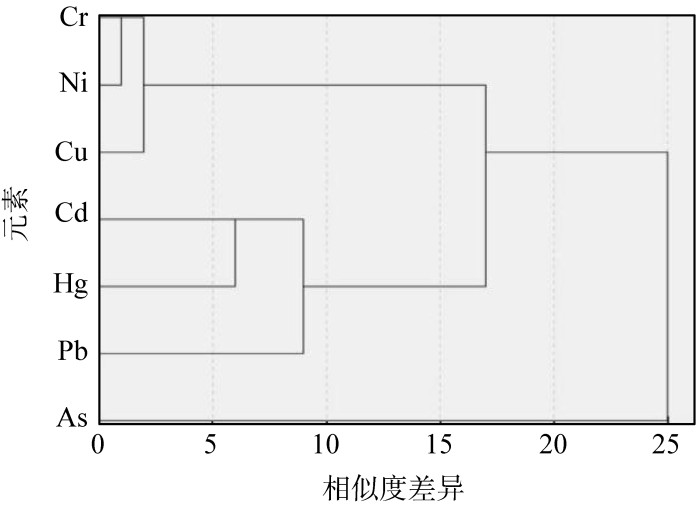 图 1 土壤重金属聚类分析Fig. 1 cluster analysis of heavy metals in soil
 下载:
全尺寸图片
为进一步确定土壤重金属来源,对7种重金属进行主成分分析,利用最大方差旋转,提取3个特征值> 1的因子,累计方差贡献率为89.5%,相关结果列于表 7。(1)第1主成分贡献率为40.5%,Cr、Ni和Cu的因子载荷均≥0.9。这3种重金属元素的变异系数均属于中等变异,且Cr、Ni和Cu质量分数均值都高于背景值,表明人为活动影响明显。结合行业类别分析,文中8家企业涉及污水处理及再生利用、环境卫生管理、生物质能发电和固体废物治理等行业,其中4家污水处理厂处理生活污水和工业废水,工业废水涉及电子、机械、食品加工、医疗和化工等多个行业。有研究表明Cr、Ni和Cu分别主要来源于电子工业、电镀化工和城市污水的镀铜管道[26],同时家庭清洁产生的生活污水也会产生这些重金属,这些含重金属的混合污水流向污水处理厂后,会通过多种方式排放到周边土壤环境中。因此,第1主成分Cr、Ni和Cu来源于生活污水、电子及电镀等行业产生的污水。(2)第2主成分贡献率为32.1%,Cd、Hg和Pb的因子载荷均≥0.8,对应变异系数分别为184.2%、152.4%和24.0%,特别是Cd和Hg为异常强变异,且Cd、Hg和Pb在空间分布上具有相似性。有研究表明Cd主要来源于印刷、塑料等工业废水[26],Hg主要来源于美容及医疗行业[27],Pb主要来源于汽车维修和清洗废水[26],同时垃圾堆放、焚烧飞灰和底渣产生的Cd、Hg和Pb也会造成周边土壤污染[28-30]。因此,第2主成分Cd、Hg和Pb来源于印刷、塑料、医疗和汽修等行业产生的污水及生物质能发电。(3)第3主成分贡献率为16.9%,As的因子载荷为1.0,其质量分数均值为背景值的1.2倍,且变异系数为中等变异,说明As在研究区也出现累计趋势。有研究表明As主要来源于含砷洗涤剂[31-32],结合研究区土壤重金属的分布特征分析,推测土壤中As来源于餐厨垃圾堆存及处理过程产生的污染。
表 7 土壤重金属主成分分析Table 7 analysis of main components of heavy metals in soil主成分 特征值 贡献率/% 贡献累计率/% 因子载荷 Cd Hg Pb Cr Ni As Cu 1 2.8 40.5 40.5 0.3 0.1 0 1.0 1.0 -0.1 0.9 2 2.2 32.1 72.6 0.9 0.9 0.8 0.1 0.1 0 0.1 3 1.2 16.9 89.5 -0.1 0.3 -0.3 0.1 -0.1 1.0 -0.2 5. 结束语
本研究系统揭示了威海市区土壤污染重点监控单位及周边土壤重金属污染特征及来源,为区域土壤污染防治提供了重要科学依据。样品中Cr、Ni和Cu等重金属含量显著高于背景值,Cd和Hg呈现异常强变异特征,表明人类活动对土壤重金属累积具有显著影响。空间分布差异揭示了不同污染物的迁移扩散规律,Cr、Ni、Cu在5区的高值集聚与电子电镀行业排污密切相关,Cd、Hg在4区的富集则指向印刷、医疗等行业的潜在贡献。污染评价结果显示,39.4%点位已达轻度污染,Cd和Hg引发的生态风险需重点关注。
尽管本研究初步构建了污染溯源体系,但仍存在局限:一方面,采样密度与时间跨度不足,难以动态追踪污染演化过程;另一方面,来源解析未充分结合企业生产数据与污染排放清单,行业关联性论证有待深化。未来研究应从3个方面拓展:(1)建立长期监测网络,结合PMF等多元统计模型提升溯源精度;(2)开展重金属形态分析,评估其生物有效性及迁移潜力;(3)探索“源-汇”动态模拟技术,为污染防控提供时空决策支持,通过多维度研究体系的构建,可为城市土壤环境风险管理提供更为精准的技术支撑。
-
图 1 土壤重金属聚类分析
Fig. 1 cluster analysis of heavy metals in soil
下载:
全尺寸图片
表 1 威海市区土壤污染重点监控单位名称及行业类别
Table 1 names and industry categories of key soil pollution monitoring units in Weihai urban area
区编号 单位名称 行业类别 1 高区污水处理厂 污水处理及其再生利用 2 威海城投餐厨垃圾处理有限公司 环境卫生管理 威海再生能源有限公司 生物质能发电 威海艾山环境再生能源有限公司 生物质能发电 3 临港污水处理厂 污水处理及其再生利用 威海毅恒环境科技有限公司 固体废物治理 4 经区污水处理厂 污水处理及其再生利用 5 崮山污水处理厂 污水处理及其再生利用 表 2 土壤重金属含量特征
Table 2 characteristics of heavy metals content in soil
重金属 质量分数/(mg·kg-1) 平均质量分数/(mg·kg-1) 变异系数% 筛选值/(mg·kg-1)[24] 背景值/(mg·kg-1)[11] Cr 38.9~151.0 79.1 36.7 — 46.4 Ni 15.5~92.3 39.0 48.7 900.0 18.5 Cu 12.2~79.8 37.4 49.2 18 000.0 17.2 As 0.9~12.3 5.4 46.5 60.0 4.5 Pb 25.3~58.3 33.5 24.0 800.0 27.1 Cd 30.0~2 000.0a 190.0a 184.2 65.0 92.0a Hg 0.1~119.2a 16.4a 152.4 38.0 23.0a 注:—指无数据;a单位为μg/kg。 表 3 土壤重金属在不同区的空间分布
单位:mg/kg Table 3 spatial distribution of heavy metals in soil in different regions
unit: mg/kg 重金属 1区 2区 3区 4区 5区 质量分数 平均值 质量分数 平均值 质量分数 平均值 质量分数 平均值 质量分数 平均值 Cr 53.2~77.7 65.9 38.9~151.0 99.3 42.7~71.1 55.7 43.5~69.9 57.6 96.1~141.0 110.0 Ni 19.0~41.7 30.0 21.1~77.2 46.9 15.5~35.5 22.5 22.6~34.8 29.5 50.7~92.3 66.7 Cu 16.5~35.0 28.6 18.5~79.8 42.0 12.2~32.6 20.3 28.8~34.6 33.1 53.1~79.4 66.2 As 5.5~7.4 6.7 4.7~12.3 7.7 3.0~7.3 5.1 2.6~4.2 3.7 0.9~4.7 2.5 Pb 26.2~45.4 35.8 25.3~58.3 31.4 26.8~44.8 31.9 33.1~49.6 39.9 25.5~36.0 30.8 Cda 30.0~170.0 100.0 30.0~200.0 290.0 30.0~130.0 70.0 270.0~330.0 310.0 90.0~160.0 110.0 Hga 9.6~62.1 36.4 0.1~119.2 19.2 0.1~36.9 14.9 4.0~13.6 7.2 0.1~9.8 2.6 表 4 单因子污染指数评价
Table 4 evaluation of single-factor pollution index
重金属 污染指数平均值 样品分布比例/% 无污染 轻微污染 轻度污染 中度污染 重度污染 Cr 1.7 9.1 51.5 33.3 6.1 0 Ni 2.1 3.1 54.5 24.2 18.2 0 Cu 2.2 18.2 33.3 27.3 21.2 0 As 1.2 33.3 60.6 6.1 0 0 Pb 1.2 21.2 75.8 3.0 0 0 Cd 2.1 48.6 33.3 3.0 12.1 3.0 Hg 0.7 78.8 12.1 6.1 0 3.0 表 5 地累计指数污染评价
Table 5 pollution assessment of ground accumulation index
重金属 地累计指数 平均值 样品分布比例/% 无污染 轻度 偏中 中度 偏重 重度 极重 Cr -0.8~1.1 0.2 45.5 48.5 6.0 0 0 0 0 Ni -0.8~1.7 0.5 36.4 45.5 18.1 0 0 0 0 Cu -1.1~1.6 0.5 24.3 54.5 21.2 0 0 0 0 As -2.8~0.9 -0.3 78.8 21.2 0 0 0 0 0 Pb -0.7~0.5 -0.3 81.8 18.2 0 0 0 0 0 Cd -2.2~3.9 0.4 69.7 15.2 12.1 0 3.0 0 0 Hg -8.4~1.8 -1.1 84.8 12.2 3.0 0 0 0 0 表 6 潜在生态风险指数污染评价
Table 6 pollution assessment of potential ecological risk index
重金属 潜在生态风险指数 平均值 比例/% 轻微危害 中等危害 强危害 很强危害 极强危害 Cr 1.7~6.5 3.4 100 0 0 0 0 Ni 4.2~25.0 10.6 100 0 0 0 0 Cu 3.6~23.2 10.9 100 0 0 0 0 As 2.0~27.3 12.1 100 0 0 0 0 Pb 4.7~10.8 6.2 100 0 0 0 0 Cd 9.8~652.2 60.9 60.6 21.2 15.2 0 3.0 Hg 0.2~207.3 28.5 78.8 12.1 6.1 3.0 0 表 7 土壤重金属主成分分析
Table 7 analysis of main components of heavy metals in soil
主成分 特征值 贡献率/% 贡献累计率/% 因子载荷 Cd Hg Pb Cr Ni As Cu 1 2.8 40.5 40.5 0.3 0.1 0 1.0 1.0 -0.1 0.9 2 2.2 32.1 72.6 0.9 0.9 0.8 0.1 0.1 0 0.1 3 1.2 16.9 89.5 -0.1 0.3 -0.3 0.1 -0.1 1.0 -0.2 -
[1] 侯聪, 王绍凯, 王琦, 等. 黄河山东段沿岸县市表层土壤重金属污染特征及源解析[J]. 环境科学, 2024, 45(9): 5485-5493. DOI: 10.13227/j.hjkx.202311031. HOU C, WANG S K, WANG Q, et al. Pollution characteristics and source apportionment of heavy metals in topsoil of counties along the Shandong section of the Yellow River[J]. Environmental Science, 2024, 45(9): 5485-5493. doi: 10.13227/j.hjkx.202311031 [2] 李军, 脱新颖, 马利邦, 等. 黄河兰州城区段饮用水源地土壤重金属污染生态与健康概率风险评估[J]. 环境化学, 2024, 43(11): 3746-3759. DOI: 10.7524/j.issn.0254-6108.2024050803. LI J, TUO X Y, MA L B, et al. Ecological and health probabilistic risk assessment of soil heavy metal pollution in the drinking-watersource in the Lanzhou urban section of the Yellow River[J]. Environmental Chemistry, 2024, 43(11): 3746-3759. doi: 10.7524/j.issn.0254-6108.2024050803 [3] 刘超琦, 宋常志, 梁学峰, 等. 安徽省某铜矿区周边农田土壤重金属污染风险评价[J]. 农业环境科学学报, 2025, 44(8): 2134-2144. DOI: 10.11654/jaes.2024-0694. LIU C Q, SONG C Z, LIANG X F, et al. Risk assessment of heavy metals in farmland soils around a copper mining area in Anhui Province, China[J]. Journal of Agro-Environment Science, 2025, 44(8): 2134-2144. doi: 10.11654/jaes.2024-0694 [4] 蔡娜, 谢静, 党华美, 等. 贵州省主要猕猴桃果园土壤重金属安全评价[J]. 江苏农业科学, 2019, 47(1): 255-260. DOI: 10.15889/j.issn.1002-1302.2019.01.060. CAI N, XIE J, DANG H M, et al. Safety evaluation of heavy metal in soils of main kiwifruit orchards in Guizhou Province[J]. Jiangsu Agricultural Sciences, 2019, 47(1): 255-260. doi: 10.15889/j.issn.1002-1302.2019.01.060 [5] 刘鸿林, 赵方凯, 杨磊, 等. 城市公园土壤重金属污染及影响因素研究: 以宁波市为例[J]. 生态环境学报, 2025, 34(5): 773-783. DOI: 10.16258/j.cnki.1674-5906.2025.05.011. LIU H L, ZHAO F K, YANG L, et al. Study on heavy metalpollution in urban park soil and influencing factors: a case study of Ningbo City[J]. Ecology and Environmental Sciences, 2025, 34(5): 773-783. doi: 10.16258/j.cnki.1674-5906.2025.05.011 [6] 余明, 边朋沙, 鲁倩, 等. 河北某矿区土壤重金属元素污染特征及来源分析研究[J]. 黄金, 2025, 46(2): 55-61+88. DOI: 10.11792/hj20250210. YU M, BIAN P S, LU Q, et al. Study on pollution characteristics and sources of heavy metal elements in soil of a mining area in Hebei Province[J]. Gold, 2025, 46(2): 55-61+88. doi: 10.11792/hj20250210 [7] 生态环境部. 土壤和沉积物无机元素的测定波长色散X射线荧光光谱法: HJ 780—2015[S]. 北京: 中国环境科学出版社, 2015. Ministry of Environmental Protection of the People's Republic of China. Determination of inorganic elements in soil and sediment by wavelength dispersive X-ray fluorescence spectrometry: HJ 780-2015[S]. Beijing: China Environmental Science Press, 2015. [8] 生态环境部. 土壤和沉积物12种金属元素的测定王水提取-电感耦合等离子体质谱法: HJ 803—2016[S]. 北京: 中国环境科学出版社, 2016. Ministry of Environmental Protection of the People's Republic of China. Determination of 12 metal elements in soil and sediment aqua regia extraction - inductively coupled plasma mass spectrometry: HJ 803-2016[S]. Beijing: China Environmental Science Press, 2016. [9] 生态环境部. 土壤和沉积物总汞的测定催化热解-冷原子吸收分光光度法: HJ 923—2017[S]. 北京: 中国环境科学出版社, 2017. Ministry of Environmental Protection of the People's Republic of China. Determination of total mercury in soil and sediment catalytic pyrolysis - cold atomic absorption spectrophotometry: HJ 923-2017[S]. Beijing: China Environmental Science Press, 2017. [10] 王棣, 李杰飞, 杨浩, 等. 洛阳市栾川县矿区周边土壤重金属污染特征、来源与生态风险评价[J]. 环境化学, 2024, 43(10): 3363-3376. DOI: 10.7524/j.issn.0254-6108.2023041902. WANG D, LI J F, YANG H, et al. Evaluation of heavy metal pollution characteristics, sources and ecological risks of soil around miningareas in Luanchuan County, Luoyang City[J]. Environmental Chemistry, 2024, 43(10): 3363-3376. doi: 10.7524/j.issn.0254-6108.2023041902 [11] 庞绪贵, 代杰瑞, 陈磊, 等. 山东省17市土壤地球化学背景值[J]. 山东国土资源, 2019, 35(1): 46-56. DOI: 10.12128/j.issn.1672-6979.2019.01.008. PANG X G, DAI J R, CHEN L, et al. Soil geochemical background value of 17 cities in Shandong Province[J]. Shandong Land and Resources, 2019, 35(1): 46-56. doi: 10.12128/j.issn.1672-6979.2019.01.008 [12] 赖书雅, 董秋瑶, 宋超, 等. 南阳盆地东部山区土壤重金属分布特征及生态风险评价[J]. 环境科学, 2021, 42(11): 5500-5509. DOI: 10.13227/j.hjkx.202103019. LAI S Y, DONG Q Y, SONG C, et al. Distribution characteristics and ecological risk assessment of soil heavy metals in the eastern mountainous area of the Nanyang Basin[J]. Environmental Science, 2021, 42(11): 5500-5509. doi: 10.13227/j.hjkx.202103019 [13] 谷峰, 孟真, 周俊仲, 等. 宁阳县农用地土壤重金属污染调查评价[J]. 环境生态学, 2024, 6(11): 52-60. DOI: 10.3969/j.issn.2096-6830.2024.11.07. GU F, MENG Z, ZHOU J Z, et al. Investigation of heavy metal pollution in agricultural land soil in Ningyang Country[J]. Environmental Ecology, 2024, 6(11): 52-60. doi: 10.3969/j.issn.2096-6830.2024.11.07 [14] 曾蛟, 孔令号, 刘淑亮, 等. 山东省某典型工业城镇土壤重金属污染特征及风险评估[J]. 物探与化探, 2025, 49(4): 954-964. DOI: 10.11720/wtyht.2025.1275. ZENG J, KONG L H, LIU S L, et al. Spatial distribution characteristics and risk assessment of heavy metals in soils of a typical industrial town in Shandong Province[J]. GeoPhysical and Geochemical Exploration, 2025, 49(4): 954-964. doi: 10.11720/wtyht.2025.1275 [15] 赵庆令, 李清彩, 安茂国, 等. 基于PMF-PCA/APCS与PERI的菏泽油用牡丹种植区表层土壤重金属潜在来源识别及生态风险评估[J]. 环境科学, 2023, 44(9): 5253-5263. DOI: 10.13227/j.hjkx.202210157. ZHAO Q L, LI Q C, AN M G, et al. Potential source identification and ecological risk assessment of heavy metals in surface soil of Heze oil peony planting area based on PMF-PCA/APCS and PERI[J]. Environmental Science, 2023, 44(9): 5253-5263. doi: 10.13227/j.hjkx.202210157 [16] 汤世凯, 扈胜涛, 黎奕宏, 等. 山东烟台养马岛南部地区土壤重金属污染风险及生态风险评价[J]. 山东国土资源, 2024, 40(6): 11-17. DOI: 10.12128/j.issn.1672-6979.2024.06.002. TANG S K, HU S T, LI Y H, et al. Evaluation of heavy mental contaminationl and ecological risk of soil in southern Yangmadao in Yantai City in Shandong Province[J]. Shangdong Land and Resources, 2024, 40(6): 11-17. doi: 10.12128/j.issn.1672-6979.2024.06.002 [17] 胡庆海, 王学求, 韩志轩, 等. 京津冀地区永清县土壤重金属地球化学特征及绿色食品产地的土壤质量评价[J]. 现代地质, 2023, 37(3): 778-789. DOI: 10.19657/j.geoscience.1000-8527.2023.015. HU Q H, WANG X Q, HAN Z X, et al. Geochemical characteristics of heavy metals in soils and soil quality evaluation of green food production in the Yongqing County of Beijing-Tianjing-Hebei region[J]. Geoscience, 2023, 37(3): 778-789. doi: 10.19657/j.geoscience.1000-8527.2023.015 [18] 李苹, 黄勇, 林赟, 等. 北京市怀柔区土壤重金属的分布特征、来源分析及风险评价[J]. 现代地质, 2018, 32(1): 86-94. DOI: 10.19657/j.geoscience.1000-8527.2018.01.08. LI P, HUANG Y, LIN Y, et al. Distribution, source identification and risk assessment of heavy metals in topsoil of Huairou District in Beijing[J]. Geoscience, 2018, 32(1): 86-94. doi: 10.19657/j.geoscience.1000-8527.2018.01.08 [19] 赵琳兴, 雷红平, 王雁鹤, 等. 黄河上游典型工业园区周边土壤重金属污染评价及来源解析[J]. 环境科学, 2025, 46(6): 3890-3901. DOI: 10.13227/j.hjkx.202404210. ZHAO L X, LEI H P, WANG Y H, et al. Evaluation and source analysis of soil heavy metal pollution around typical industrial parks in upper reaches of Yellow River[J]. Environmental Science, 2025, 46(6): 3890-3901. doi: 10.13227/j.hjkx.202404210 [20] 徐争启, 倪师军, 庹先国, 等. 潜在生态危害指数法评价中重金属毒性系数计算[J]. 环境科学与技术, 2008(2): 112-115. DOI: 10.19672/j.cnki.1003-6504.2008.02.030. XU Z Q, NI S J, TUA X G, et al. Calculation of heavy metals' toxicity coefficient in the evaluation of potential ecological risk index[J]. Environmental Science & Technology, 2008(2): 112-115. doi: 10.19672/j.cnki.1003-6504.2008.02.030 [21] 安文超, 汪进生, 孙立娥, 等. 山东省某县级市土壤重金属富集状况及来源分析[J]. 湖南师范大学自然科学学报, 2022, 45(1): 84-92. DOI: 10.7612/j.issn.2096-5281.2022.01.010. AN W C, WANG J S, SUN L E, et al. Enrichment evaluation and source analysis of soil heavy metals in a county-level city of Shandong Province[J]. Journal of Natural Science of Hunan Normal University, 2022, 45(1): 84-92. doi: 10.7612/j.issn.2096-5281.2022.01.010 [22] 安文超, 孙立娥, 马立科, 等. 某典型工业聚集区遗留地土壤重金属污染特征及健康风险评价[J]. 湖南师范大学自然科学学报, 2022, 45(5): 108-116. DOI: 10.7612/j.issn.2096-5281.2022.05.012. AN W C, SUN L E, MA L K, et al. Assessment of heavy metals and human health risk in surface soils in a legacy land of typical industrial agglomeration area[J]. Journal of Natural Science of Hunan Normal University, 2022, 45(5): 108-116. doi: 10.7612/j.issn.2096-5281.2022.05.012 [23] 杨崛园, 熊健, 李伟, 等. 基于PCA-APCS-MLR模型的西藏扎西岗湿地土壤重金属风险评价及来源解析[J]. 生态学杂志, 2024, 43(6): 1807-1816. DOI: 10.13292/j.1000-4890.202406.038. YANG J Y, XIONG J, LI W, et al. Soil heavy metal risk evaluation and source analysis of Zhaxigang wetland in Tibet based on PCA-APCS-MLR model[J]. Chinese Journal of Ecology, 2024, 43(6): 1807-1816. doi: 10.13292/j.1000-4890.202406.038 [24] 生态环境部, 国家市场监督管理总局. 土壤环境质量建设用地土壤污染风险管控标准(试行): GB 36600—2018[S]. 北京: 中国环境科学出版社, 2018. Ministry of Ecology and Environment of the People's Republic of China, State Administration for Market Regulation. Soil environmental quality risk control standards for soil pollution in construction land(trial): GB 36600-2018[S]. Beijing: China Environmental Science Press, 2018. [25] 赵霏, 李红芳, 彭英湘, 等. 典型涉污企业周边土壤重金属污染特征及潜在生态风险评价[J]. 中国环境监测, 2022, 38(3): 126-136. DOI: 10.19316/j.issn.1002-6002.2022.03.14. ZHAO F, LI H F, PENG Y X, et al. Characteristics and potential ecological risks of heavy metal in soils around typical pollution-related enterprises[J]. Environmental Monitoring in China, 2022, 38(3): 126-136. doi: 10.19316/j.issn.1002-6002.2022.03.14 [26] 杨妍妍, 李金香, 刘亚平, 等. 北京城市污水处理厂污泥中重金属污染状况及潜在生态风险分析[J]. 环境污染与防治, 2019, 41(9): 1098-1102+1107. DOI: 10.15985/j.cnki.1001-3865.2019.09.018. YANG Y Y, LI J X, LIU Y P, et al. Pollution feature and assessment of potential ecological risk of heavy metals in municipal sludge from wastewater treatment plants in Beijing[J]. Environmental Pollution and Control, 2019, 41(9): 1098-1102+1107. doi: 10.15985/j.cnki.1001-3865.2019.09.018 [27] 余丹丹, 彭希珑, 陈春丽, 等. 鄱阳湖生态经济区污水处理厂污泥重金属污染特征、来源及潜在生态风险评价[J]. 南昌大学学报(理科版), 2023, 47(6): 588-594. DOI: 10.13764/j.cnki.ncdl.2023.06.005. YU D D, PENG X L, CHEN C L, et al. Characteristics, sources and potential ecological risk assessment of heavy metal pollution from sewage treatment plant sludge in Poyang Lake Ecological Economic Zone[J]. Journal of Nanchang University (Natural Science), 2023, 47(6): 588-594. doi: 10.13764/j.cnki.ncdl.2023.06.005 [28] 刘亮, 赵广民, 刘启任, 等. 生活垃圾焚烧系统中Pb和Cd的迁移转化特性[J]. 环境污染与防治, 2024, 46(7): 964-969. DOI: 10.15985/j.cnki.1001-3865.202403134. LIU L, ZHAO G M, LIU Q R, et al. The migration and transformation characteristics of Pb and Cd in domestic solid waste in cineration system[J]. Environmental Pollution and Control, 2024, 46(7): 964-969. doi: 10.15985/j.cnki.1001-3865.202403134 [29] 倪海凤, 旦增, 周文武, 等. 拉萨市垃圾焚烧飞灰重金属特性分析及风险评价[J]. 环境工程, 2022, 40(3): 89-93+131. DOI: 10.13205/j.hjgc.202203014. NI H F, DANG Z, ZHOU W W, et al. Characteristics analysis and risk assessment of heavy metals of waste incineration fly ash in Lhasa[J]. Environmental Engineering, 2022, 40(3): 89-93+131. doi: 10.13205/j.hjgc.202203014 [30] 刘洪华, 朱水, 董杰, 等. 某生活垃圾处理园区周边土壤重金属分布特征及风险评价[J]. 环境化学, 2021, 40(8): 2388-2398. DOI: 10.7524/j.issn.0254-6108.2020041802. LIU H H, ZHU S, DONG J, et al. Distribution characteristics and risk assessment of heavy metals in soil around an integrated waste management facility[J]. Environmental Chemistry, 2021, 40(8): 2388-2398. doi: 10.7524/j.issn.0254-6108.2020041802 [31] 柴明青, 许菲菲, 王晓平. 洗涤剂中有害重金属的分析[J]. 应用化工, 2012, 41(4): 713-715. DOI: 10.16581/j.cnki.issn1671-3206.2012.04.036. CHAI M Q, XU F F, WANG X P, et al. Analysis of heavy metal in detergent[J]. Applied Chemical Industry, 2012, 41(4): 713-715. doi: 10.16581/j.cnki.issn1671-3206.2012.04.036 [32] 郭广慧, 陈同斌, 杨军, 等. 中国城市污泥重金属区域分布特征及变化趋势[J]. 环境科学学报, 2014, 34(10): 2455-2461. DOI: 10.13671/j.hjkxxb.2014.0619. GUO G H, CHEN T B, YANG J, et al. Regional distribution characteristics and variation of heavy metals in sewage sludge of China[J]. Acta Scientiae Circumstantiae, 2014, 34(10): 2455-2461. doi: 10.13671/j.hjkxxb.2014.0619
